
La Vela CoffeeSEO
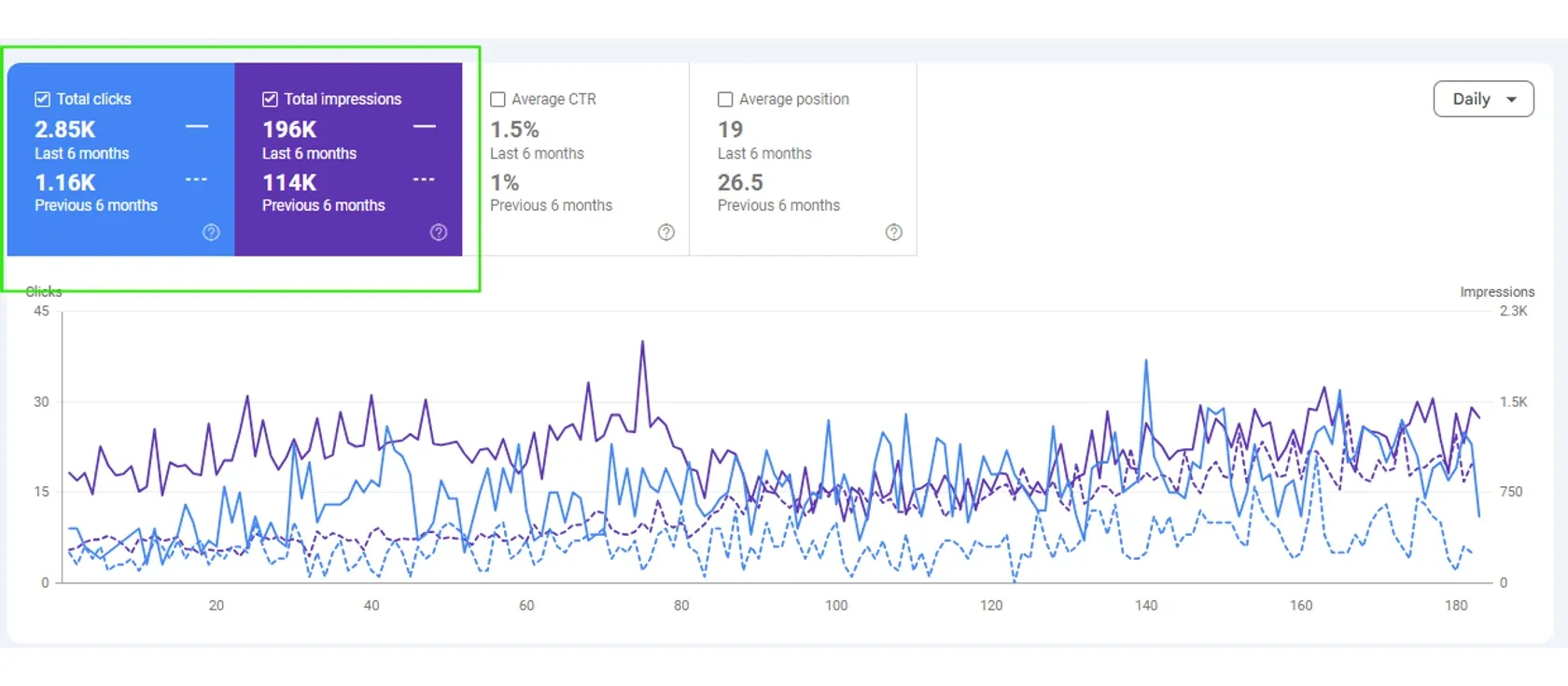
+146%organic clicks
- 2.85Kclicks, from 1.16K
- 196Kimpressions, from 114K
- 19average position, from 26.5
Ecommerce email marketing
You paid for the click, the shopper filled a cart and left. Nothing was sent. Another customer bought once in March and has heard from you only through a weekly sale email since. The store spends to win each customer and then sends everyone the same message.
Or call +1 (510) 312-5086 Mon to Sat, 9:00 to 18:00 ET
Free, written by a person, yours to keep either way.
Certified across the platforms we buy on. 150+ businesses, 7 years.






A campaign is an email you write and send once, such as a sale announcement. A flow is an email, or a short series, sent automatically when a shopper does something: joins the list, leaves a cart, places an order, goes quiet.
Flows come first because they act on a moment. Baymard Institute puts the average documented cart abandonment rate at 70.22%, drawn from 50 studies (Baymard cart abandonment statistics). Many of those shoppers were only browsing. Some had a reason an email can answer, such as a shipping cost they had not seen until checkout.
The ecommerce and retail marketing page explains why the second order matters to margin. The table below is the set of flows that produce it.
| Flow | What starts it | What it says | What is counted |
|---|---|---|---|
| Welcome | Someone joins the list | Who you are, what sells, one reason to order | First orders from new subscribers |
| Browse abandonment | A known visitor views a product and leaves | The product, with reviews | Orders from the flow |
| Abandoned cart | Items added, no checkout | The cart, the delivery cost, an answer to a doubt | Carts recovered and their value |
| Abandoned checkout | Checkout started, not paid | A direct link back to pay | Checkouts recovered |
| Post-purchase | An order ships | How to use it, when it arrives, what goes with it | Second orders within 60 days |
| Replenishment | The usual time to run out has passed | A reorder link | Reorders |
| Review request | Delivery confirmed | One question, one link | Reviews gathered |
| Win-back | No order for a set period | What is new, then a last note before removal | Customers who return |
Our email flows checklist covers the build order, and the welcome sequence guide covers the first one in detail.
Gmail. Every sender must authenticate mail and keep the spam rate reported in Postmaster Tools below 0.3%. A sender of 5,000 or more messages a day must also set up SPF, DKIM and DMARC and support one-click unsubscribe in marketing messages (Gmail email sender guidelines).
SPF, DKIM and DMARC are DNS records that prove a message came from your domain. Google’s FAQ defines a bulk sender as one sending close to 5,000 messages to personal Gmail accounts in 24 hours. It adds that the status has no expiry, and that enforcement increased from November 2025 (Gmail sender guidelines FAQ).
Yahoo. Bulk senders must pass DMARC with a policy of at least p=none, support one-click unsubscribe, honor unsubscribes within 2 days, and keep spam complaints below 0.3% (Yahoo sender best practices).
Federal law. CAN-SPAM requires a valid physical postal address in each message and an opt-out honored within 10 business days. The FTC lists penalties of up to $53,088 for each email in violation (FTC CAN-SPAM compliance guide).
A store with a list in the tens of thousands can reach the bulk threshold with one sale email. Our post on email sender requirements explains each record. This section is a summary and not legal advice.
Month one. You get an audit of the list, the flows that exist, and the DNS records. Authentication is fixed before anything is sent. People who have not opened or clicked in a long period are set aside from campaigns.
Month two. Abandoned cart and welcome flows are written, built and tested with real orders. Each has a timing rule so nobody receives two flows at once.
Month three. Post-purchase and win-back flows follow. Segments are built from order history: first-time buyers, repeat buyers, lapsed buyers and high spenders.
Month four onward. Campaigns are planned around your calendar and sent to segments instead of the whole list. Each flow is reviewed against its own numbers, and one element is tested at a time.
There are two bills: the software and the people.
Software is billed by the email platform. As one example, Klaviyo’s free plan covers up to 250 active profiles and 500 email sends a month (Klaviyo pricing). Paid tiers are on the same page, so check them against your list size.
For agency work, one published guide from InboxArmy gives retainers of $1,000 to $3,000 a month for smaller businesses and $3,000 to $10,000 for larger programs. It prices a one-time flow build at $1,000 to $5,000 (InboxArmy pricing guide). That is one agency’s view of the market, not a survey.
Mavix publishes no price on this page. We quote after a free review of the account. The email pricing page explains how the fee is set. List size, the number of flows and whether product data is already connected to the email tool move the figure.
Open rate is reported lower down, since mail apps can load a message without the person reading it.
If the store has few visitors and a list in the low hundreds, there is nobody to send to yet. Bring shoppers in first, through Google Ads for ecommerce or through ecommerce SEO services.
If you sell something bought once in a decade, build the cart flow and the review request, and skip the rest.
If the list was bought, we will not send to it. A bought list can break the complaint thresholds above within a single send.
Otherwise, our email marketing service starts with the audit. Send us the store and the email platform you use, and we will tell you which flow is missing the most money.
Proof
Two online stores: one selling commercial coffee equipment, one retail account on Google Ads.
La Vela CoffeeSEO
+146%organic clicks
Google Ads, retailMedia buying
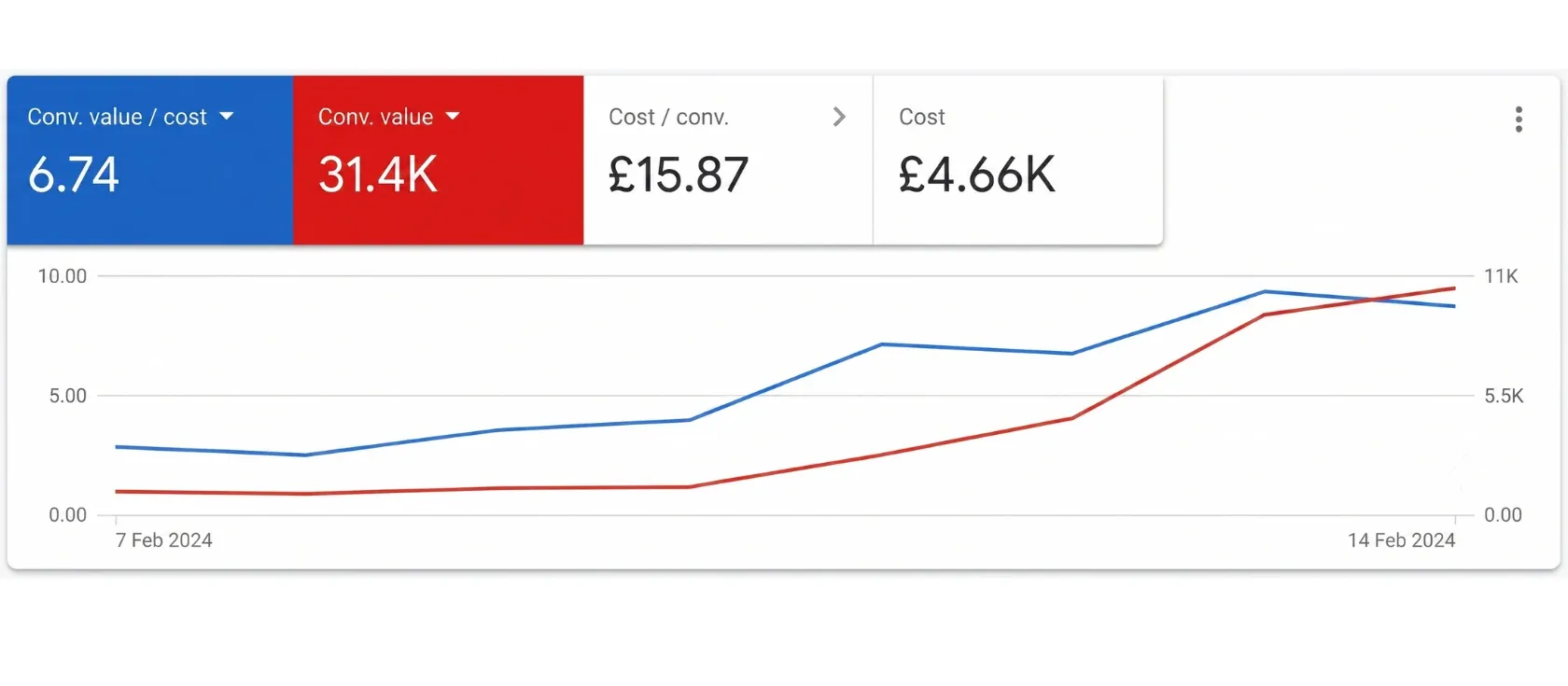
6.74xreturn on ad spend
Questions
Next step
A written review of your search, ads and follow-up, by a person. You keep the document whether you hire us or not.
Free review
A 50% increase in 90 days, or you get a refund plus $1,000. Yours to keep whether you hire us or not.