
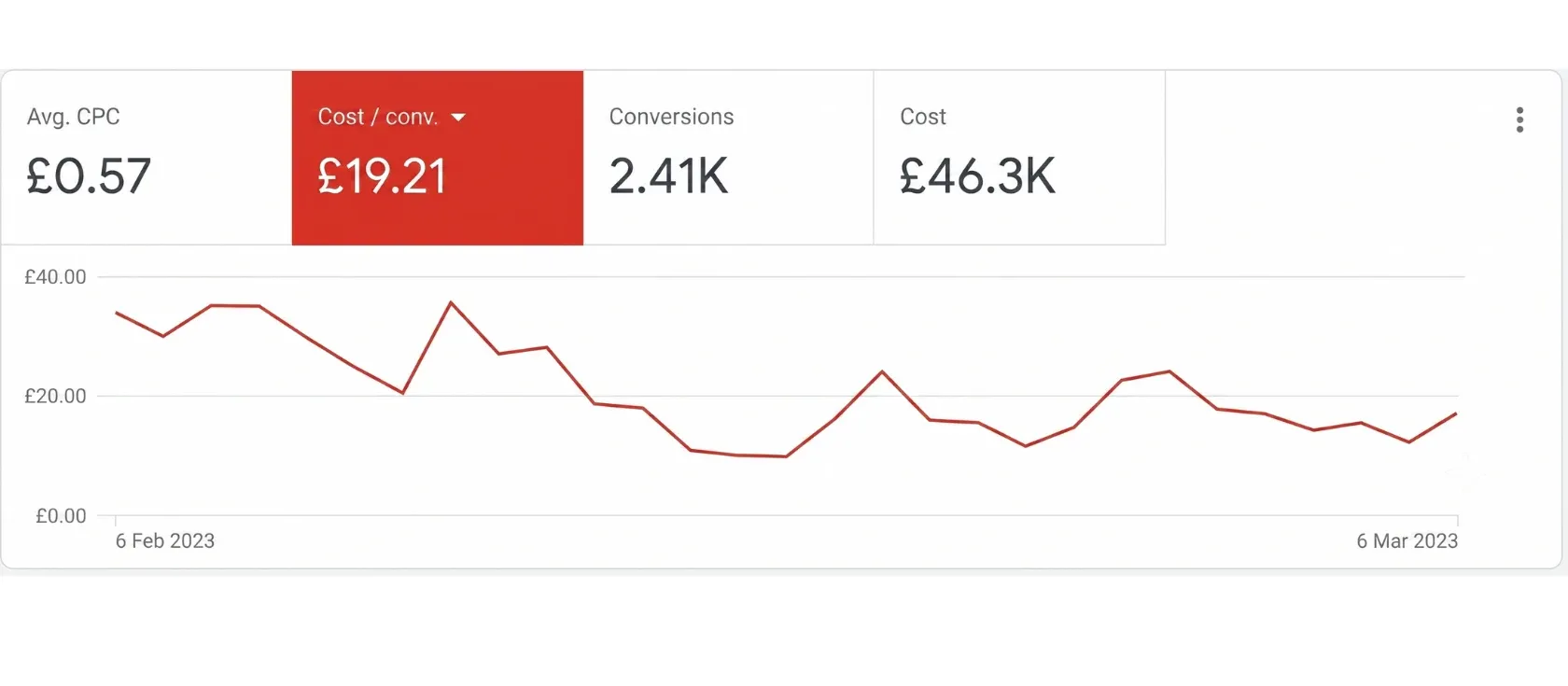
Google Ads, lead generationMedia buying
2.41Kconversions
- £19.21cost per conversion
- £0.57average cost per click
- £46.3Kspend managed
Electrician SEO
A panel upgrade, an EV charger and a dead outlet at 9pm are three different searches, and a single Services page answers none of them properly. The firm with a page for each job, its license number in view and its towns named is the one that gets the call.
Or call +1 (510) 312-5086 Mon to Sat, 9:00 to 18:00 ET
Free, written by a person, yours to keep either way.
Certified across the platforms we buy on. 150+ businesses, 7 years.






Electrical searches fall into three groups, and each one behaves differently.
The electrical contractors page covers how those three buyers differ across every kind of marketing. This page is about organic search only: which pages you need, what they have to say, and how long the work takes.
The first thing we look for is a single Services page with a bulleted list: panels, lighting, EV chargers, generators, troubleshooting. That gives Google one page to rank for thirty different searches. A homeowner comparing panel upgrade quotes wants to know whether the utility is involved, whether a permit is pulled and how long the power is off. A bullet point does not answer that.
The second is a missing license number. The Bureau of Labor Statistics notes that “most states require electricians to pass a test and be licensed”. In some states showing the number is the law. California’s license board requires it in “all forms of advertising”, and it counts any website that solicits business. Texas requires the name and number on both sides of each work vehicle, written as TECL 1234. A site that hides the number can break a rule and lose the buyer who checks.
The third is the copied city page: one paragraph, forty towns, the name swapped each time. Google’s guidance asks whether a page shows “first-hand expertise and a depth of knowledge”. A town page passes when it says something true about the place. That means the age of the housing, the utility that serves it, the permit office and work you have finished there.
| Search | What the customer wants | The page that should rank |
|---|---|---|
| “emergency electrician near me” | Someone on the way tonight | An emergency page with the phone number, the hours it is answered and the towns covered |
| “breaker keeps tripping” | To know whether it is dangerous | A short article that says what is safe to check and when to call |
| “200 amp panel upgrade cost” | A price range and what it includes | A panel upgrade page that explains the permit, the utility and the timeline |
| “EV charger installation” plus a town | An installer who handles the permit | An EV charger page, split by charger type |
| “whole house generator installation” | Sizing help and a price range | A generator page naming the brands you install |
| “commercial electrician” plus a town | License, insurance and references | A commercial page kept apart from the residential ones |
Each row is a page. If the right-hand column does not exist on your site, that search goes to a firm that built it.
Month one. You get a baseline: what ranks now, which searches bring calls, and what stops pages being read by Google. Call tracking goes in so a booked job can be traced to the page that produced it. The conversion tracking guide explains the setup.
Months two and three. The job pages are written, starting with the highest-value work. Each one carries the license number, the permit process, a price range if you will publish one, and photographs of your own panels and installs. The method for choosing which jobs come first is in the keyword research guide.
Months three and four. Town pages are built where there is something local to say, and the job pages are linked to each other and to those towns.
Months four to six. Troubleshooting articles answer the “is this dangerous” searches and point to the job pages. Links are earned from suppliers, trade associations and local business groups.
Google’s own guide says “some changes might take effect in a few hours, others could take several months”. Our rule of thumb is to judge a new job page at six months. There is more on timing in how long SEO takes.
Three things move the cost: how many job pages are missing, how many towns you serve, and how much on the current site has to be repaired first. A two-van residential firm in one town is a smaller job than a contractor covering a metro area with a commercial division.
A useful yardstick is what the same visitor costs when you pay for the click. LocaliQ’s benchmark of 3,211 US home services campaigns, from April 2024 to March 2025, puts electricians at $12.18 a click and $93.69 a lead on search ads. A page that ranks does not carry a charge per visit, though it costs money to build and takes months to work. The SEO ROI calculator lets you run that comparison with your own job values.
We do not publish a price for electricians. Mavix quotes after a free review, and the SEO pricing page shows how the work is priced.
If you need the phone to ring this month, organic search will not do it. Google Ads for electricians is the faster answer, and the two can run side by side.
If you do not appear in the map results for your own town, start with local SEO for electricians. The profile work is quicker than building pages, and it is where emergency calls come from.
If after-hours calls go to voicemail, fix that before buying more visibility. And if every van is booked three weeks out, you may only need the commercial page and nothing else. The full method is on the SEO service page.
Proof
Not accounts in this trade. Two service businesses that sell through enquiries and calls, which is the same way this trade sells.
Google Ads, lead generationMedia buying
2.41Kconversions
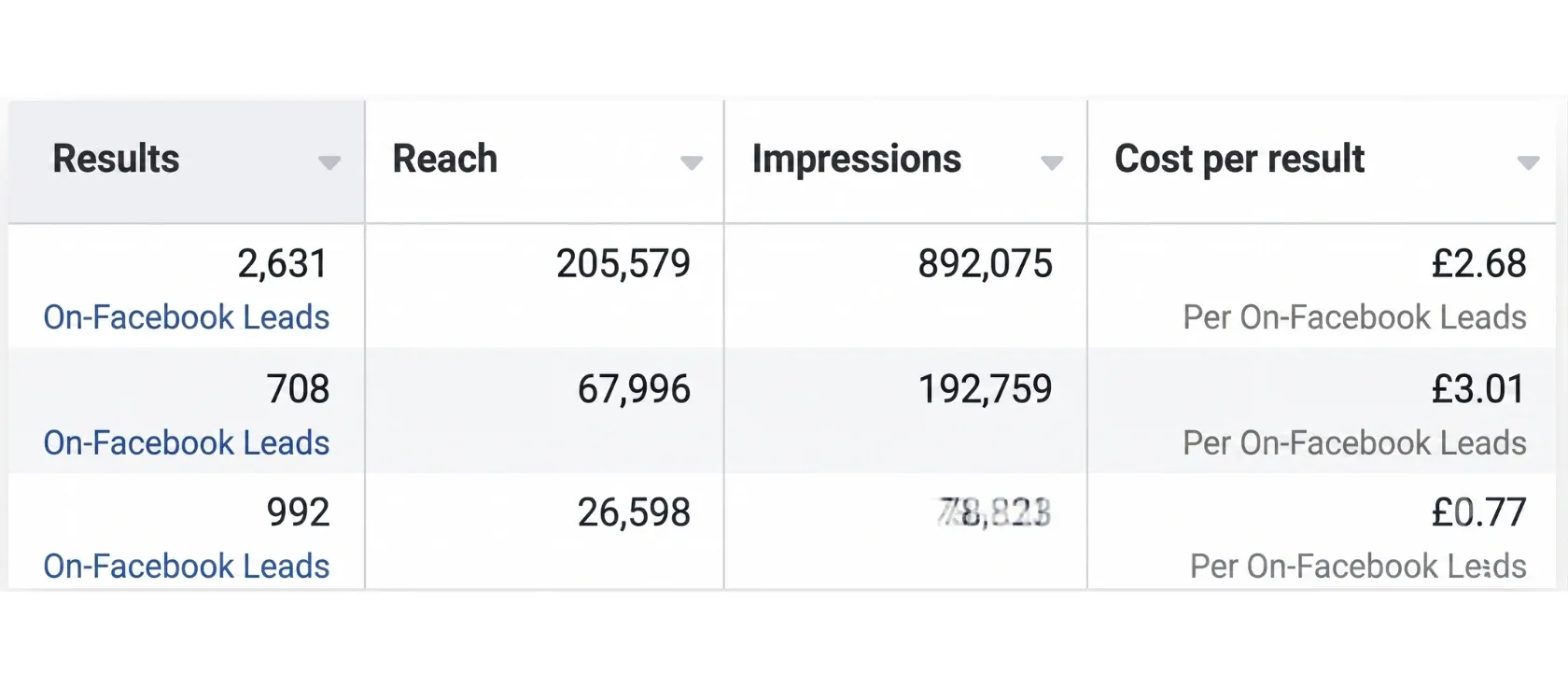
Meta, lead generationMedia buying
£2.68cost per lead
Questions
Next step
A written review of your search, ads and follow-up, by a person. You keep the document whether you hire us or not.
Free review
A 50% increase in 90 days, or you get a refund plus $1,000. Yours to keep whether you hire us or not.