
Mavix Marketing Mavix Marketing, home +1 (510) 312-5086

Keyword clustering

Turn a keyword list into a page plan.

Paste your keywords and see which ones belong on the same page and which need their own. Runs in your browser, so the list never leaves this tab.

  • What it is

    A tool that groups a keyword list by shared meaning, so you can see which searches belong on one page and which need their own.

  • What it tells you

    How many pages your list should become, which keyword each page should be built around, and which terms are really the same search.

  • What you need

    A keyword list, one per line. From your research tool, Search Console, or the phrases customers use. Up to a few thousand.

  • Where it runs

    In this tab. Nothing is uploaded or stored. Copy the groups out as a CSV when you are done.

Why cluster at all

Pages compete with each other before they compete with anyone else.

Two pages, one search, neither ranks

When several pages chase the same intent they split the signal between them and compete with each other instead of with your competitors.

One page per intent, not per keyword

Google treats plumber near me and emergency plumber as the same need. Clustering shows you which of your terms it will read as one page.

A list becomes a page plan

Each group is a page to build or fix, with a focus keyword and the variations it should mention. That is the plan before anything is written.

Runs entirely in this tab. Open your network panel and watch: nothing leaves the page.

How it works

Four steps, all in your browser.

01

Normalise each phrase

Lowercased, punctuation removed, split into words. Filler words like the, for and near are dropped.

02

Match word forms

A light stemmer treats plumber, plumbers and plumbing as the same word, without going so far that unrelated words merge.

03

Compare what is left

Two keywords group when the meaningful words they share pass your strictness setting, measured against the shorter phrase so short terms are not punished.

04

Name and rank each group

Each group is named after the words most of its members share, sorted largest first, and its shortest keyword is proposed as the page focus.

This is a lexical method: it groups by the words in the phrases. The strongest method compares which pages actually rank for each keyword, which needs live ranking data and is what we use on client work. For a few hundred keywords this gets you most of the way.

What moves the real number

  • How you set the strictness
  • How consistent the wording in your list is
  • Brand names and place names in the phrases
  • Whether the list mixes buying and research searches

After clustering

What to do with the groups.

Match groups to pages you already have

Every group is a page. If two groups point at the same existing page, the page is trying to do two jobs. If one group has no page, that is the gap.

Build the page around the focus keyword

The shortest keyword in the group is usually the clearest statement of the intent. Title and heading come from it; the rest of the group is what the body should cover.

Merge or split by hand where the words mislead

Two phrases can share words and mean different things, or share none and mean the same. Read each group once and move what does not belong.

Copy the CSV into your plan

Cluster number, label, keyword and whether it is the page focus, one row each. Paste it into your content plan or send it with a review request.

Real accounts

What one page per intent produced on real accounts.

Two businesses whose pages were mapped one keyword per page before anything was rewritten. The figures are read off GA4 and Search Console.
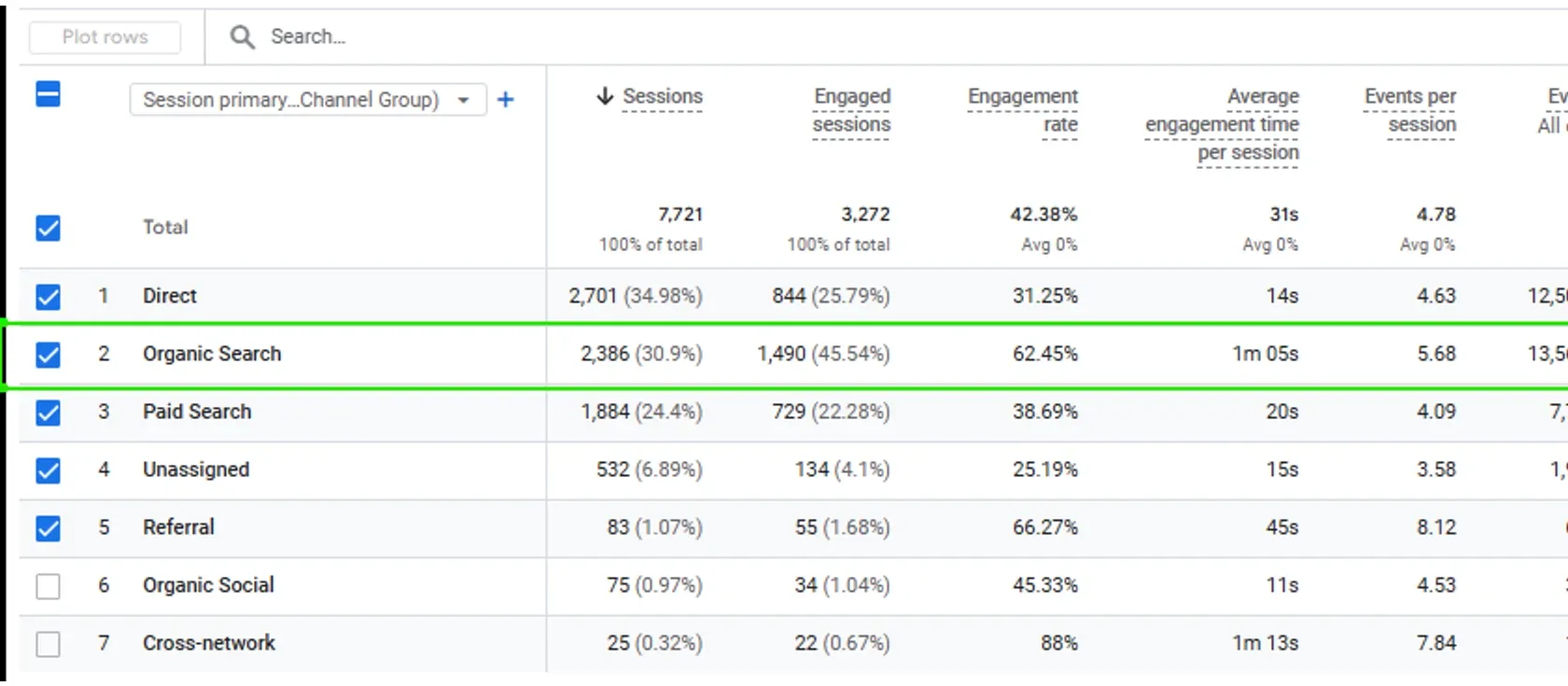
GA4 channel report with Organic Search highlighted: 2,386 sessions and 1,490 engaged sessions at a 62.45% engagement rate, against Paid Search on 1,884 sessions and 729 engaged

All Dogs RockSEO

45.5%of engaged sessions are organic
  • 1,490engaged sessions, the most of any channel
  • 62.45%engagement rate, against 38.69% paid
  • 2,386sessions, against 1,884 paid
Read from
The client's own GA4 property
Period
The GA4 report is a channel comparison
Read the full story
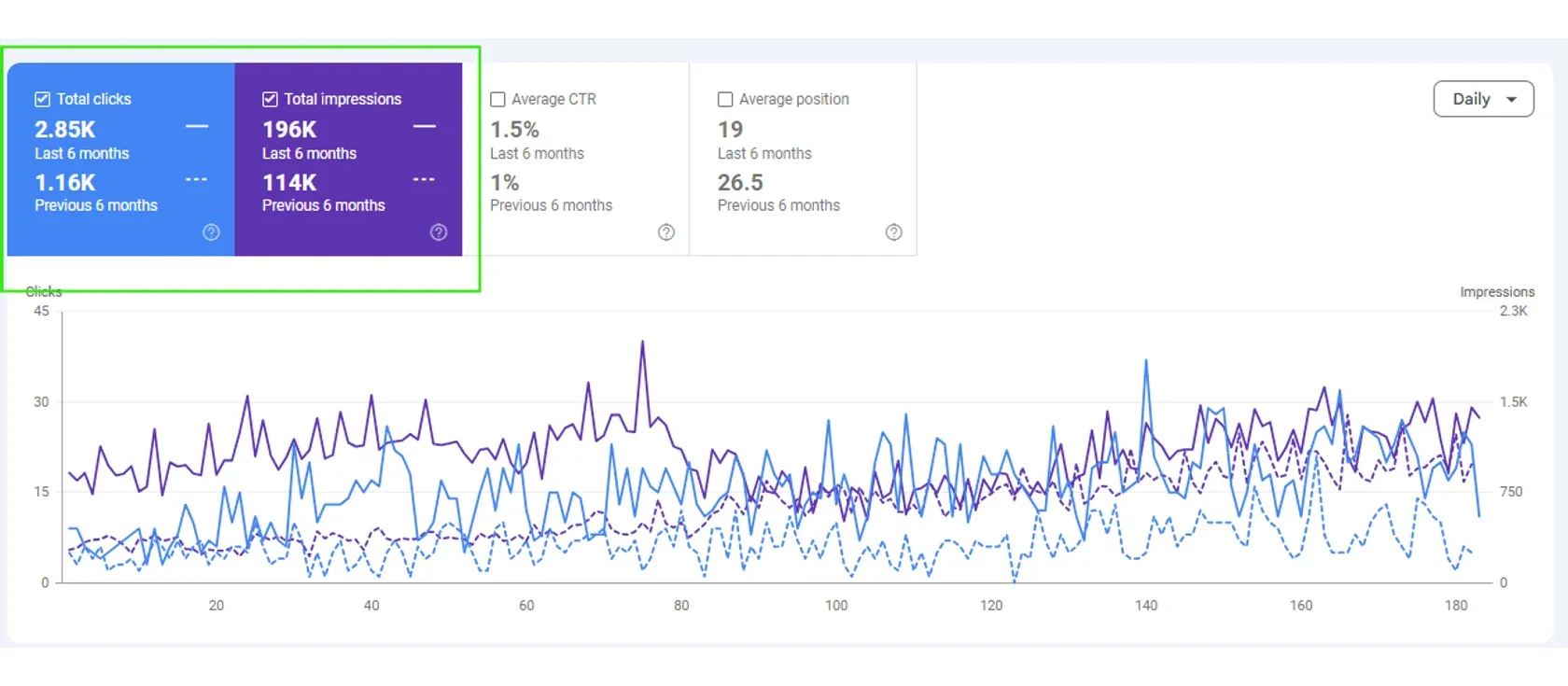
Search Console comparing six months against the previous six: clicks 2.85K against 1.16K, impressions 196K against 114K, average position 19 against 26.5

La Vela CoffeeSEO

+146%organic clicks

  • 2.85Kclicks, from 1.16K
  • 196Kimpressions, from 114K
  • 19average position, from 26.5
Read from
The client's own Search Console
Period
Six months against the six months before it
Read the full story

Questions

What people ask before they trust the groupings.

01 What does the keyword clustering tool do?
It groups a keyword list by shared meaning so you can see which terms belong on one page and which need their own. Paste the keywords, one per line, and press the button. Each group is named after the words its members share and the shortest phrase is marked as the primary. The whole thing runs in your browser and the result appears on the page.
02 How does this cluster keywords?
It lowercases each phrase, strips punctuation and removes stopwords. A light stemmer collapses plurals and common endings so plumber and plumbers count as the same word. Every keyword then has a signature of the words that carry meaning. Keywords are grouped when their signatures overlap by more than the strictness you set, measured against the shorter of the two. Groups are named after the words most of their members share.
03 What does the grouping strictness slider do?
It sets how much two keywords must overlap before they land in the same group. The default is 60 percent. Move it lower and groups merge, so a list of a hundred keywords might become a dozen broad pages. Move it higher and groups split, so near duplicates stay together and everything else stands alone. Try both ends and see which one matches how you would build the pages.
04 Is this as good as SERP overlap clustering?
No, and it is worth saying so plainly. The strongest method compares which pages actually rank for each keyword and groups by overlap, because that reflects how the search engine understands intent rather than how the words look. That needs live ranking data. This tool is lexical, meaning it works on the words alone. For a few hundred keywords it gets you most of the way and costs nothing.
05 Does my keyword list get uploaded anywhere?
No. Everything runs in your browser. Nothing is sent to Mavix, nothing is stored and closing the tab discards the list. You can check by opening the network panel in your browser while you run it and watching that nothing leaves the page. A keyword list is commercial research, and a tool that posted it to a server would be asking for trust it has not earned.
06 Where do I get a keyword list to paste in?
From wherever you research keywords. Export a column from Search Console, a keyword research tool or a spreadsheet, and paste it in with one keyword per line. The tool removes exact duplicates before it runs. If you have nothing to hand, press the sample button to see how a plumbing list groups and then replace it with your own.
07 How many keywords can it handle?
It is comfortable up to a few thousand. Past that the comparison between every keyword and every group slows down in a browser, and you want a proper tool with ranking data behind it. For a single site or a single service line, a few hundred keywords is the usual size and that runs instantly.
08 Why does keyword clustering matter?
Because two pages targeting the same intent compete with each other rather than with your competitors. Clustering is how you find that before you write. It is the usual explanation for why a site with plenty of content ranks for none of it. One page per cluster, with the primary keyword in the title, is the shape that ranks.
09 What do I do with the groups?
Treat each group as one page. The primary keyword is the shortest phrase and often the best title. The rest are the variations that page should answer in its headings and body. Check the groups against your existing site to find pages that already cover a cluster without knowing it, and clusters that have no page at all. Copy the result as CSV to take it into a spreadsheet.
10 What does copy as CSV give me?
A table with four columns: the cluster number, its label, the keyword and whether it is the primary. Paste it into a spreadsheet and you have a starting content plan with one row per keyword. Nothing is downloaded and no file is created. It goes to your clipboard and stays there until you paste it.
11 Why did two keywords end up in different groups?
Because the words they share fell under the strictness you set, or because a word that matters to you was treated as a stopword. Words like near, best and cheap are stripped on purpose, since they rarely change which page should rank. Lower the strictness and run it again. If the two still sit apart, they probably deserve separate pages.
12 Does this replace the free review?
No. Clustering tells you what to build. The review tells you what to build first. Send the site and the list through the contact page. A person will map the clusters to pages, tell you which ones you already rank for without knowing it, and which two are worth doing first. You keep the mapping whether you hire us or not.

Next

Clustering tells you what to build. The review tells you what to build first.

Send us the site and the list. We will map the clusters to pages, tell you which ones you already rank for without knowing it, and which two are worth doing first.

Free, written by a person, yours to keep either way.

Free review

Send the address. We will tell you what it is costing you.

  • Search. What you rank for now, and the searches you should be winning.
  • Paid. What the spend is buying, and the campaigns quietly eating it.
  • Email. Whether the list is mailed at all, and what the missing flows are worth.
  • Tracking. Whether it measures anything real, or counts page views as sales.

The review is free, and yours to keep whether you hire us or not.

Send the site. We will say what we would fix first.

A minute to fill in. A written answer from a person, not a sequence.

Free, and yours whether you hire us or not.

Free review

A written plan for more enquiries from your site.

  • What you rank for, and what you should.
  • What the ad spend is buying, and what a lead really costs.
  • Which follow-up emails your list is missing.
  • Whether your tracking counts anything real.

Read by a person, written for your business, back within one working day. Yours to keep whether you hire us or not.

150+ businesses since 2019. No sequence, nobody chases you.

Free, and yours whether you hire us or not.

Book a call

Pick a time that suits you.

Fifteen minutes with the founder, who will have read your site before you speak.