SEO or Google Ads: which one should a small local business start with?
Which to start with depends on how soon you need calls, what a customer is worth and whether anyone searches for you. How a local business works it out.
If you run a small local business and need calls this quarter, start with Google Ads, provided a customer is worth more than the clicks cost in your trade. Google reviews most new ads within one business day (Google Ads Help), so paid search can put you in front of searchers almost at once. SEO cannot be bought or hurried. Google says it never accepts money to include or rank sites in its search results, and that no one can guarantee a first-place ranking (Google Search Central).
That is the short answer. The longer one comes down to three numbers: how long you can wait, what you can afford to pay for a customer, and whether anyone in your area searches for what you do. This post is about the first decision, which one to start with. If you already know you want both and are asking how to divide the money across a year, read SEO vs PPC: how to split a budget between them over a year.
The short version
- A new Google Ads campaign can show within a day, because Google reviews most ads within one business day.
- SEO has no published timeline. In the local accounts we manage, commercial search terms usually take three to six months to move on a site with little history, and longer in crowded trades.
- Paid search only works if a customer is worth more than the clicks it takes to win one. In the 2026 LocalIQ benchmarks, the average legal click cost $9.87 against $5.42 across all industries.
- Paying for ads does not lift your organic ranking. Google states that advertising with it has no effect on your site’s presence in its search results.
- If almost nobody in your area searches for your service, neither channel is the right starting tool.
- Before either one, fix what happens after someone gets in touch. A slow reply or a long form wastes both channels.
SEO and Google Ads side by side
| Question you are asking | Google Ads | SEO |
|---|---|---|
| How fast can it start? | Most ads are reviewed within one business day | No set timeline. Three to six months for commercial terms in the local accounts we manage |
| What do you pay for? | Each click, at a price set by an auction | The work: pages, fixes, your Business Profile, reviews |
| What happens when you stop paying? | The ads stop showing that day | Pages that rank keep bringing visits for a while |
| What decides your position? | Your bid, ad and landing page quality, and the competition in that auction | Relevance, site health and trust. Local results add distance and popularity |
| What does it tell you quickly? | Which search terms bring enquiries and what each one costs | Very little in the first month |
| Where is it weakest? | Trades where a click costs more than a customer is worth | Urgency, and search pages crowded by directories |
The auction factors in the table are Google’s own list. They are your bid, the quality of your ads and landing page, and the Ad Rank thresholds. They also include the competition in that auction, the context of the search and the expected impact of your ad assets (Google Ads Help). The local ranking factors are from Google’s Business Profile guidance, which says local results are mainly based on relevance, distance and popularity (Google Business Profile Help).
How long can you wait for the phone to ring?
If you need enquiries this quarter, this input alone usually decides it. Paid search can produce an enquiry in the first week, because most ads are live within a business day of being submitted.
Organic search is slower and less predictable. Google does not publish a timeline, and its own advice to anyone hiring for SEO is to ask what results they expect and in what timeframe (Google Search Central). In the local accounts we manage, commercial terms on a site with little history usually take three to six months to move, and longer where the first page is crowded. Treat that as our experience, not a promise. Anyone who quotes you a fixed date for a ranking is guessing.
What can you afford to pay for a customer?
Work it out before you spend anything. Take your average job value, multiply it by your gross margin, then by how many times a typical customer comes back. That is what one customer is worth to you. Decide what share of it you are willing to spend to win them, then multiply that by the share of enquiries that turn into jobs. The result is the most you can pay for one enquiry.
Now compare it with what clicks cost in your trade. Google’s Keyword Planner shows estimates of how often a term is searched and what it costs to target it (Google Ads Help). If the numbers say a click costs more than an enquiry is worth to you, paid search is not viable at any level of skill, and no agency can change that.
Some trades feel this more than others. In LocalIQ’s 2026 search benchmarks, the all-industry average was $5.42 a click and $66.69 a lead. Attorneys and legal services averaged $9.87 a click and $131.63 a lead. Home and home improvement averaged $8.33 a click and $90.92 a lead (LocalIQ). Those are averages across many accounts, and your own figure will differ. The cost per lead benchmarks post explains why.
Is anyone in your area searching for what you sell?
Search captures demand that already exists. It does not create it. Search Console shows the queries that already bring people to your site (Search Console Help), and Keyword Planner shows the volume for the wider category. If the answer for your town is close to nothing, both channels are the wrong tool. The better starting point is word of mouth, referrals, local partnerships or paid social, where you put the offer in front of people who were not looking yet.
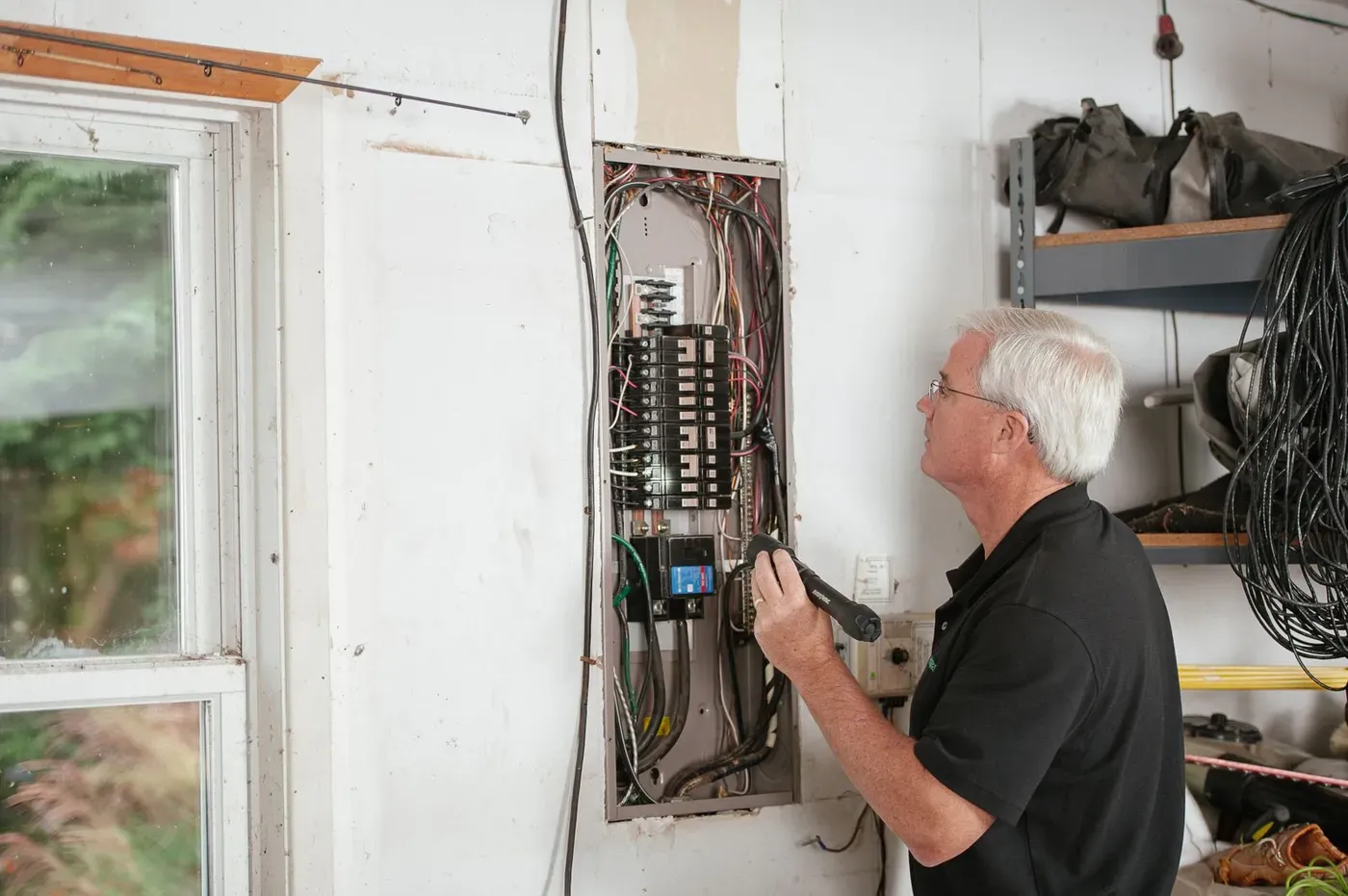
Photo: Kathleen Austin Kuhn on Pexels.
What is each one good at?
Paid search is good at answering a question quickly. Within a month of a properly built account you know what an enquiry costs, which search terms bring them and whether your landing page works. That is worth knowing even if you then turn the ads off, because it is what you need before committing months of work to content.
Organic search is good at building up over time. A page that ranks does not cost more when a competitor raises their bid, so the cost of each enquiry tends to fall as pages settle in. For a local business, much of this lives in the Business Profile and reviews as well as the website. Google says prominence draws on how many websites link to a business and how many reviews it has (Google Business Profile Help). The local SEO checklist covers that side.
Each has a weak point. Paid search stops the moment the budget does, and leaves nothing behind. Organic search is poor at urgency, and it struggles where the first page is taken by directories, marketplaces and national publishers. In those cases you can do the work well and still not reach page one inside a year.
Which should a local service business start with?
For a service business with a working offer and a sales process that turns enquiries into jobs, this is the order we recommend:
- Start with paid, built tightly, at a budget that produces enough enquiries to learn from. Use the first eight weeks to find out what an enquiry costs and which terms bring the good ones.
- Build organic underneath it, aimed at the terms paid has already shown bring enquiries. Most content work picks keywords on search volume alone, which is how a quarter gets spent on pages nobody calls from.
- Shift spend as organic catches up. When a page ranks well for a term, reduce paid spend on that term and move it to the ones organic cannot reach yet.
The paid campaign in step one can be small. Exact match keywords give you the most control over who sees your ad, at the cost of reaching fewer searches (Google Ads Help). One campaign, one service, one page built for it is enough to learn from.
When should you start with SEO instead?
Start with SEO when the arithmetic rules out paid. If your margin cannot support what clicks cost in your trade, running ads to “gather data” while losing money on every job is a well-meant way to run out of cash. In that case organic is the main channel from the start, and the timeline is longer, but the cost per enquiry does not rise with the auction.
Start with SEO too if your Business Profile and site are in poor shape. Ads pointed at a page that does not say what you do, where you work or how to book will cost more per enquiry than they need to. The technical and profile fixes help both channels, so doing them first is never wasted.

Photo: Kaboompics on Pexels.
What neither of them fixes
Your enquiry form might ask for eleven fields. Nobody might reply for a day and a half. Your page might never say what happens after someone gets in touch. In any of those cases, both channels are pouring visitors into a leaking bucket. That work is cheaper than either channel and it improves both at once, which is why we look at it first. The conversion audit checklist lists what to check.
It is the answer we give more often than either channel: fix the page and the follow-up, then decide.
The bottom line
Start with the channel your numbers can pay for, on the timeline you actually have. For most local service businesses with a margin that supports the clicks, that means a small, tightly built paid campaign first, with organic work built on what it teaches you. Where the clicks cost more than a customer is worth, the order reverses.
Questions people ask about this
Can I do both at once?
Yes, and it is usually the right answer once there is budget for it, because they feed each other: paid tells you within weeks which search terms convert. That is exactly what you want to know before committing months of content work. What you should not do is split a small budget so thinly that neither channel reaches the volume it needs to produce a signal.
Which one is cheaper?
Per customer, over a long enough horizon, organic is usually cheaper in the accounts we manage. In the first quarter, paid, because organic has spent that quarter producing little. Both statements are true and the disagreement is about which timeframe matters to you.
What if nobody is searching for what I sell?
Then neither, and this is the case people most often refuse to accept. Search captures demand that already exists. If nobody types anything that describes your product, the problem is demand creation and the answer is paid social, outbound or partnerships. We will say this on the audit rather than take the money.
What budget do I need for paid to produce a signal?
Enough to generate a meaningful number of conversions inside the eight-week learning window described above. Work backwards: estimate the cost per click for your terms in the keyword planner, divide by a plausible landing page conversion rate, and you have a rough cost per enquiry. Multiply that by the conversions you want to learn from. If the total is beyond your budget, narrow to your single best service rather than spreading thin.
How do I know if my category is dominated by aggregators?
Search your most valuable term in a private window and read the first page. If the results are directories, marketplaces, review sites and national publishers rather than businesses like yours, that is the case described above. Organic will be slow there and paid may be the only way in. Try a longer, more specific version of the term as well. Those often show local businesses even when the head term does not.
When should I reduce paid spend on a term?
When the organic page for that term sits in the top few positions and the paid conversions on it have stopped rising. Check the search terms report and Search Console side by side for that query. Reduce rather than pause, because ads and organic together can still win more of the page. Watch enquiries for the term for a month. If they hold, move the saved budget to a term organic cannot reach.
Does running ads help my organic rankings?
Not directly. Google states that advertising with it has no effect on a site’s presence in its search results. The help is indirect. Ads tell you which terms convert, which makes your content work better targeted, and the traffic can earn reviews and links that do move rankings. Treat ads as research and revenue, not as a ranking lever. If an agency tells you the ad budget will lift organic results, ask them to explain the mechanism.
What if my paid cost per enquiry is close to my limit?
Then paid is marginal and the account needs tightening before you scale it. Cut search terms that never convert, split the best terms into their own campaigns with their own landing pages, and fix the form. Those three changes usually move cost per enquiry more than any bidding change. If it still sits at the limit after that, keep it small and put the extra money into organic for those terms.
Should I start organic while paid is still unproven?
Yes, for the technical and tracking work, because that takes time and helps both channels. Hold the content until paid has told you which terms convert. Writing pages for terms chosen on search volume alone is the mistake described above, and it wastes the quarter. A sensible order is tracking first, then site health, then paid, then pages for the proven terms.
How do I compare the two channels fairly?
Use one number, cost per enquiry, measured the same way for both, and compare over at least a quarter. Count only enquiries, not clicks or page views. Attribute organic enquiries to organic even when the person later clicked an ad, and note first touch in the CRM. Then compare per-enquiry cost and lead quality. Comparing paid month one against organic month one is not a fair fight, for the reasons above.
Can a very small budget still learn something from paid?
Yes, if it is focused. Run one campaign on your single highest-value service, exact match only, pointing at one page built for it. That produces a clean read on cost per enquiry for that service without spreading the money across ten terms. What a small budget cannot do is answer the question for every service at once. Pick the one that matters and learn about that.
Free review
Want this looked at on your own site?
Send the address. A person reads it and writes back with the two or three things that would move your enquiry number first. Free, and yours to keep whether you hire us or not.