
La Vela CoffeeSEO
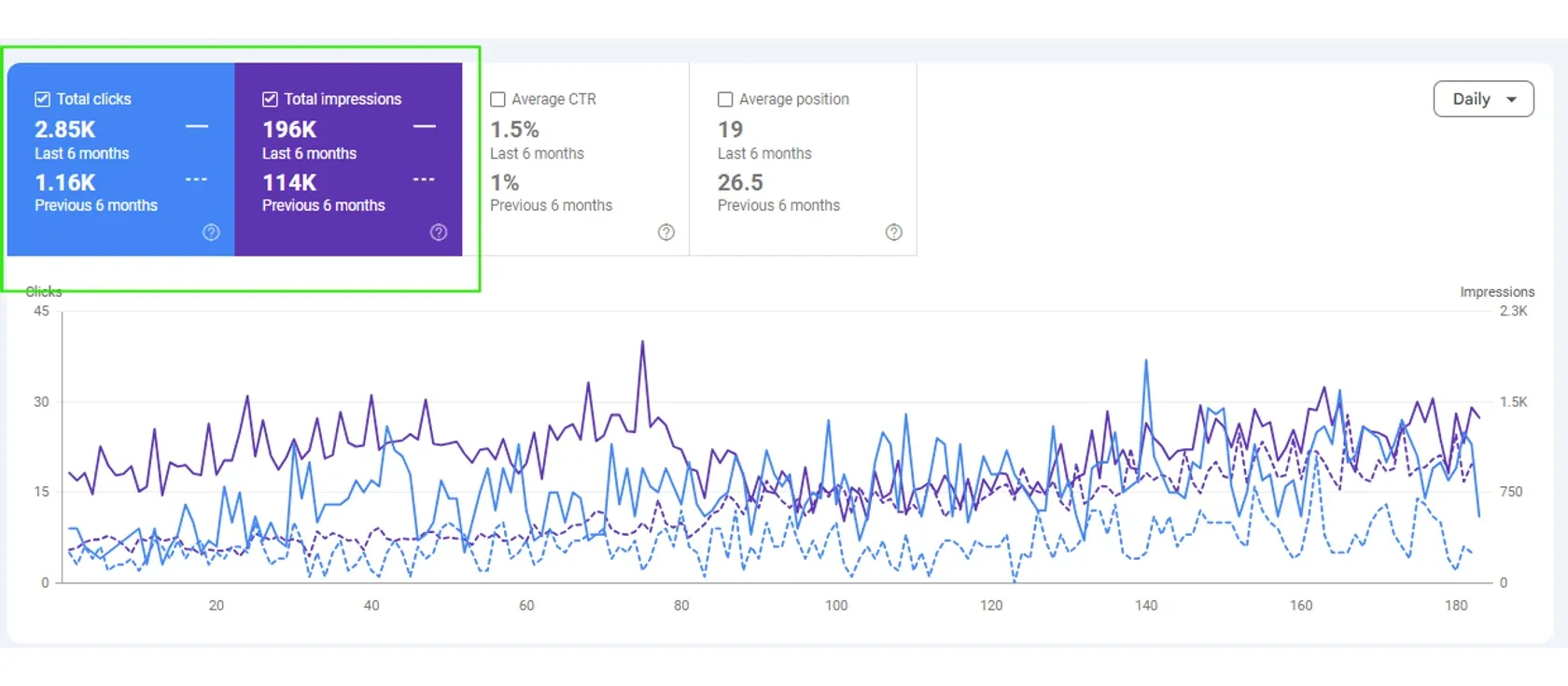
+146%organic clicks
- 2.85Kclicks, from 1.16K
- 196Kimpressions, from 114K
- 19average position, from 26.5
Ecommerce SEO
Your store has 4,000 products and Google has indexed 60,000 URLs. Nearly all of them are filter and sort pages nobody searches for. The category page that could rank for the thing you sell is a grid of thumbnails with no words on it.
Or call +1 (510) 312-5086 Mon to Sat, 9:00 to 18:00 ET
Free, written by a person, yours to keep either way.
Certified across the platforms we buy on. 150+ businesses, 7 years.






A shopper who types “standing desks” is choosing between types. One who types “60 inch walnut standing desk” has chosen the type and is comparing models. One who types a brand and model number is comparing stores and prices.
Each lands on a different kind of page. The first belongs to a category page, the second to a filtered collection or a product, the third to a product page with price and stock showing. The ecommerce and retail marketing page sets out how shoppers search. This page is about which URL should answer each search, and what stops it.
The stakes are large. The Census Bureau estimated US retail e-commerce sales at $340.2 billion for the second quarter of 2026, or 17.1% of total retail sales (Census Bureau quarterly e-commerce report).
Filters make URLs faster than Google can read them. Color, size, price and sort order multiply into thousands of addresses. Google’s guidance says crawlers will access a very large number of these, leaving less time for new, useful URLs (managing faceted navigation).
Variants compete with each other. Google’s guidance for stores is that each variant can have its own URL, with one chosen as canonical (URL structure for ecommerce sites). Canonical means the version you tell Google to treat as the main one. Without it, five color URLs can compete for the same search.
Category pages have no text. A grid of products gives Google the product names and nothing about the category.
Out-of-stock pages vanish. A product page that earned links is deleted when stock runs out, and the ranking goes with it.
Supplier descriptions. The same paragraph appears on every store that carries the item.
La Vela Coffee sells commercial coffee machines and espresso equipment. Its product pages had been written for the catalogue. We rebuilt them around what a buyer of each machine types, including the brand and model names.
Over six months against the six before, Search Console showed organic clicks rise from 1.16K to 2.85K and average position move from 26.5 to 19. Organic revenue went from negligible to just over $1,400. That is a small figure, and it is stated as the deck reported it, without calendar dates.
What it does not prove: this is one account over one period with no control group. Coffee equipment demand is seasonal, so part of the movement belongs to the market. The full record is in the La Vela Coffee case study.
| Search type | Example | Page that should rank | What it needs |
|---|---|---|---|
| Category | commercial espresso machines | Category page | A written introduction, subcategory links, buying questions answered |
| Category plus attribute | two group espresso machine | A filter page you choose to keep indexable | Its own title, heading and a line of text |
| Product | brand and model name | Product page | Unique description, price, stock, structured data |
| Comparison | model A vs model B | Guide or comparison article | Real differences, a link to both products |
| Problem | espresso machine for small cafe | Guide | An answer first, products second |
| Filter combinations nobody types | color plus size plus sort order | None | Blocked from crawling or pointed to the category |
Month one. You get a crawl of the store set beside what Google has indexed. On a store with filters, look at the filter URLs first. Revenue is reported by landing page for the first time, so you can see which pages earn.
Month two. Filter and sort URLs are blocked or consolidated, following Google’s own options of robots.txt rules and canonical tags. Variant URLs get one canonical each. The technical SEO audit guide lists the checks in order.
Months three and four. The category pages with the most search demand are written. Product data is marked up so Google can show price and stock in results. Google’s documentation says supplying both structured data and a Merchant Center feed gives the widest eligibility (product structured data).
Months five and six. Product pages are rewritten in order of margin. Guides are added for the comparison and problem searches, each linking to the category it supports.
A replatform or a URL change in this period needs its own plan. See the site migration guide before anyone changes a URL pattern.
Mavix prints no price here. We quote after a free review of the store.
For context, Ahrefs surveyed 439 SEO providers and reported an average of $2,917 a month, with agencies at $3,209 (Ahrefs SEO pricing survey). The survey is not specific to stores. A store sits above a brochure site in effort because of three things:
Put your average order value and margin into the SEO return calculator to see what extra organic orders would be worth.
If the store is new and has no orders, find out whether the product sells before investing in search. A small Shopping campaign answers that sooner. See Google Ads for ecommerce.
If first-time buyers never come back, a second order is cheaper to win than a new ranking. Start with email marketing for ecommerce.
If a replatform is three months away, do the migration plan now and the content after the move. Otherwise, our ecommerce SEO service begins with the crawl. Send the store URL and we will say how many of your indexed pages should not be there.
Proof
Two online stores: one selling commercial coffee equipment, one retail account on Google Ads.
La Vela CoffeeSEO
+146%organic clicks
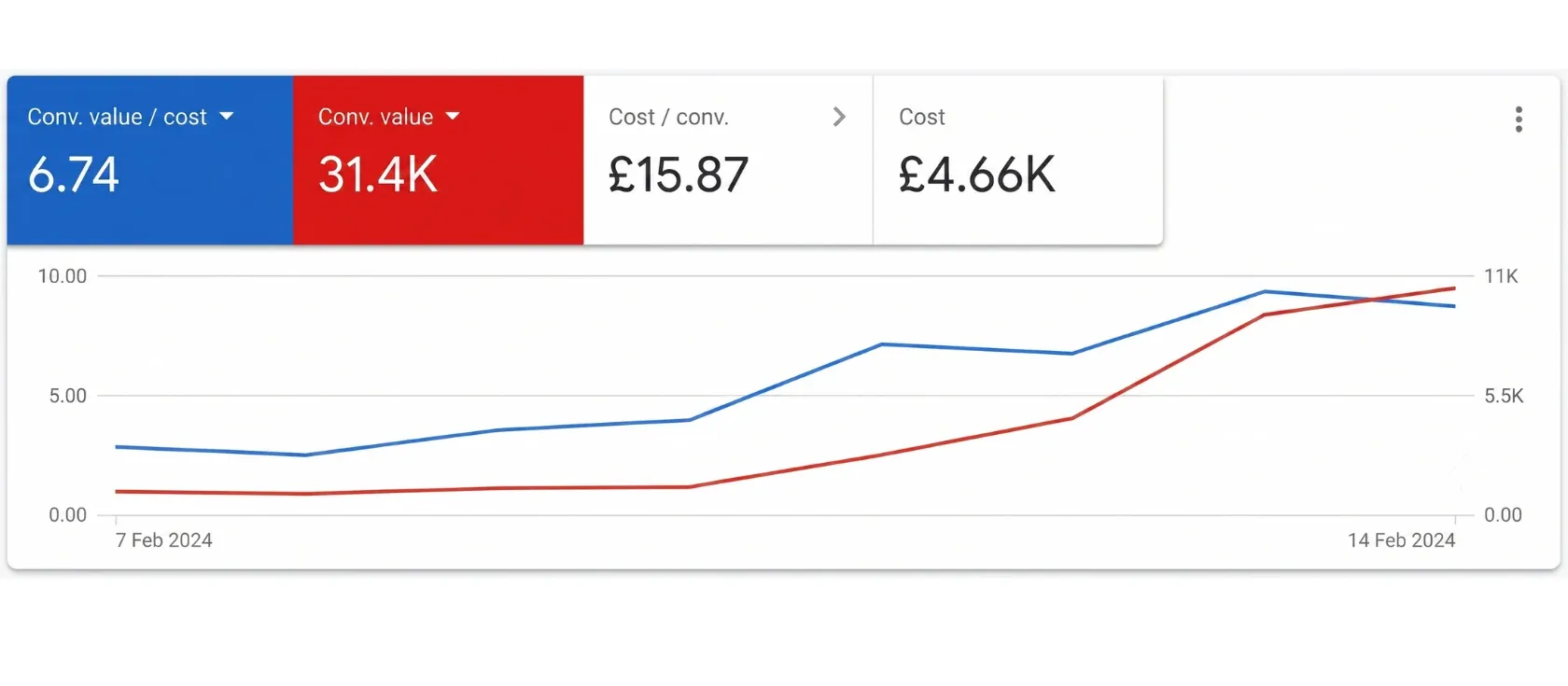
Google Ads, retailMedia buying
6.74xreturn on ad spend
Questions
Next step
A written review of your search, ads and follow-up, by a person. You keep the document whether you hire us or not.
Free review
A 50% increase in 90 days, or you get a refund plus $1,000. Yours to keep whether you hire us or not.