
Mavix Marketing Mavix Marketing, home +1 (510) 312-5086

Free tool

Set a marketing budget you can defend.

Start from revenue and a growth goal, get a monthly budget and a channel split with fees and media separated. The percentages are yours to change, and the reasoning is written underneath.

  • What it is

    A calculator that turns annual revenue and a growth goal into a monthly budget, split across paid ads, search and email.

  • What it tells you

    The monthly and annual budget, how much reaches the platforms versus pays for the work, the channel split, and the revenue it must return.

  • What you need

    Annual revenue, your goal for the year, a percentage of revenue if you have one, the fee share and your gross margin.

  • What to do next

    Check the break-even revenue against what marketing brings in today. Then send us the site and we will say whether the split fits your market.

What your business already knows

This sets the starting percentage and the channel weighting.
Override the default if you already know your number.
What it costs to have the work done, as opposed to what reaches the platform.

What the split comes out at

Monthly marketing budget $0
Annual budget $0
Monthly media spend $0
Monthly fees $0
Media buying $0
SEO $0
Email $0
Revenue this must return to break even $0

How this is calculated

The budget is revenue times your chosen percentage, divided by twelve. Fees and media are split by the share you set. The channel split is weighted by the goal you picked: holding position leans on search and email, taking share leans on paid, because paid is the only one that moves inside a quarter.

Break-even revenue is the monthly budget divided by your gross margin. That is what the marketing has to generate before it has paid for itself, which is a different and larger number than the budget.

The percentage ranges here are industry convention, not a rule. We show a range rather than a single figure because a precise number would be invented.

What the result means

A percentage of revenue is a starting point, not an answer.

Fees and media are different money

One buys attention, the other buys the people pointing it. A budget quoted as a single figure hides which one you are short of, and short of media is a very different problem from short of hands.

It sets the bar the budget must clear

The last row turns your spend into the revenue it has to produce at your margin just to stand still. That is the number to judge next year against, rather than whether the reporting looked busy.

The defaults are arguable, and yours to change

Every percentage on this page can be edited, and the reasoning sits under the result rather than behind a form. If you disagree with a split, change it and watch what moves.

How realistic is the result?

The percentage ranges are industry convention rather than a rule, and the channel weights are defaults you should change. Treat the split as a first draft.

What moves the real number

  • Your gross margin
  • How fast you need to grow
  • Which channels already work for you
  • Competition in your market
  • Seasonality
  • How much of the work is done in-house

Where the sum flatters itself

  • Low margin businesses. At a 15% margin, a spend that looks normal against revenue is enormous against the money you keep.
  • Long sales cycles. If a deal takes nine months to close, this year's budget is buying next year's revenue and the break-even row reads early.
  • Starting from nothing. A new site cannot absorb a mature budget usefully. The first months buy learning, and learning is slower than spending.
  • Referral-heavy businesses. If most work arrives by word of mouth, a revenue percentage overstates what marketing needs to carry.
  • One big client. When a third of revenue sits with one account, the percentage is built on a number that could halve with one phone call.

Reading the result

Four things to do with the number.

Sanity check the break-even revenue

If the budget has to return more than your best year ever, the percentage is too high for where you are. Cut it until the number is one you would bet on in a bad quarter.

Ask what the media share actually buys

Split monthly media by a realistic cost per click and see how many visits it buys. Sometimes the honest answer is that the budget cannot move a paid channel, and it should all go to one thing instead of three.

Fund the slow channel from a stable month

Search takes months to return anything. Funding it from a good quarter and cutting it in a bad one produces the worst of both, so it belongs in the base budget or nowhere.

Leave a tenth unspent

Hold some back for the thing that works. Most useful budget decisions get made in month five, when one channel is clearly beating the others and there is nothing left to move into it.

Real accounts

What the same sum produced on real accounts.

One search account and one ads account, so you can see what each side of a split produced on a real business.
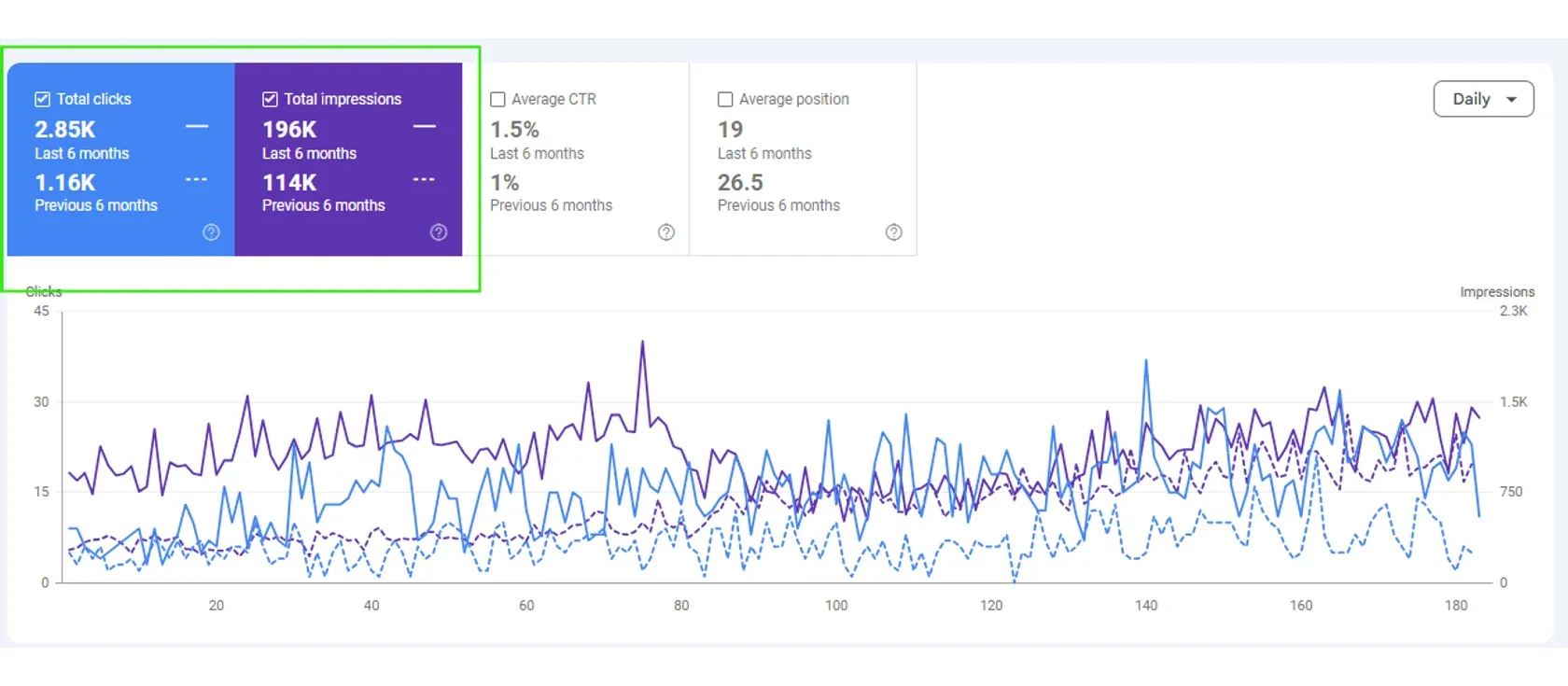
Search Console comparing six months against the previous six: clicks 2.85K against 1.16K, impressions 196K against 114K, average position 19 against 26.5

La Vela CoffeeSEO

+146%organic clicks
  • 2.85Kclicks, from 1.16K
  • 196Kimpressions, from 114K
  • 19average position, from 26.5
Read from
The client's own Search Console
Period
Six months against the six months before it
Read the full story
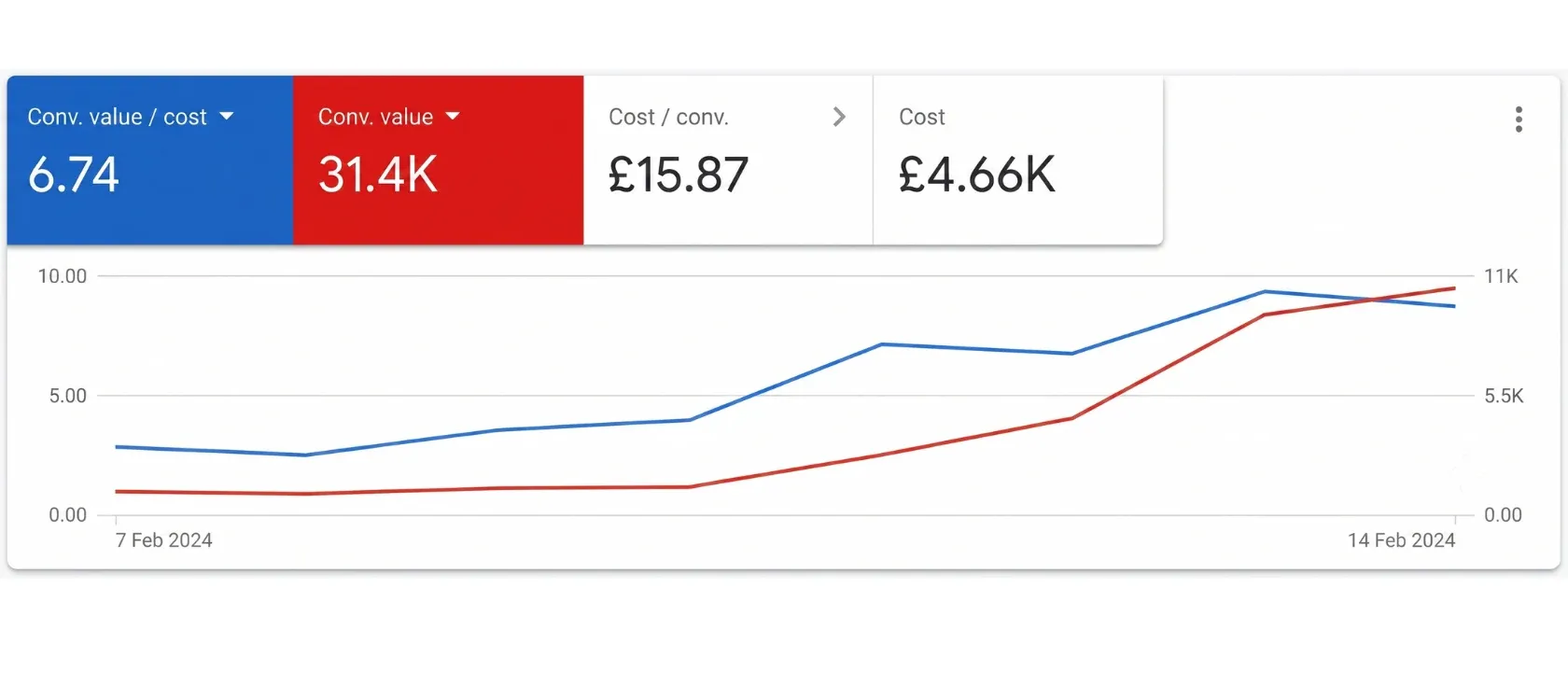
Google Ads showing 6.74 conversion value per cost and £31.4K conversion value

Google Ads, retailMedia buying

6.74xreturn on ad spend

  • £31.4Kconversion value
  • £4.66Kspend behind it
  • £15.87cost per conversion
Read from
The Google Ads account itself
Period
7 to 14 February 2024, an eight-day window
Read the full story

Questions

What people ask before and after using it.

01 What does the marketing budget calculator do?
It turns your annual revenue and a growth goal into a monthly marketing budget you can defend. You pick whether you are holding position, growing steadily or taking share quickly, and it sets a starting percentage of revenue. It then splits the budget into fees and media, and across media buying, search and email. The last row shows the revenue that budget must return at your margin just to break even.
02 Where does the percentage of revenue come from?
It is a convention rather than a law, and the tool treats it that way. The goal you pick sets a starting percentage, and you can override it in the box underneath if you already know your number. The default for steady growth is 8 percent. A single figure presented as authoritative would be a made-up figure presented as authoritative, so the reasoning is written under the result instead.
03 What should I enter for annual revenue?
The last twelve months of sales, from your accounts rather than from a forecast. If a single client makes up a large share of that revenue, consider running the sum again without them. A percentage built on one account that could leave with a phone call is a budget built on sand. If you are new and have no year of revenue, use a conservative projection and say so.
04 Should the split be even across channels?
Almost never. Paid buys attention this month and stops the day you stop paying. Search compounds over quarters and keeps working after the invoice stops. Email costs little to run and returns well once a list exists. The split here weights toward whichever goal you pick, so holding position leans on search and email and taking share leans on paid. Override it once you have your own data.
05 Does this include agency fees or just media spend?
Both, split out. Media spend is what reaches the platform. Fees are what it costs to have someone run it. The share going to fees defaults to 35 percent and you can change it. Reporting the two as one number is how a business ends up thinking its cost per lead is lower than it is, so the tool keeps them on separate rows.
06 What is the break-even revenue row?
The monthly budget divided by your gross margin. That is the revenue the marketing has to generate before it has paid for itself, which is a different and larger number than the budget. If it is more than your best ever month, the percentage is too high for where you are. Cut it until the number is one you would bet on in a bad quarter.
07 What if my budget is smaller than the output suggests?
Spend it on one channel rather than three. A budget that would work on one produces nothing meaningful spread across three. The most common cause of a marketing budget returning nothing is that it was divided until no part of it was large enough to matter. The verdict under the result says when the monthly figure is too small to split.
08 What moves the real number most?
Your margin, your sales cycle and where your work comes from. At a low margin, a spend that looks normal against revenue is enormous against the money you keep. A long sales cycle means the budget for this year buys revenue for next year, so the break-even row reads early. If most of your work arrives by referral, a revenue percentage overstates what marketing needs to carry. A new site cannot absorb a mature budget usefully.
09 What should I do with the split?
Sanity check the break-even revenue first. Divide the monthly media figure by a realistic cost per click and see how many visits it buys. Fund the slow channel from a stable month, because search cut in a bad quarter produces the worst of both. And leave a tenth unspent, so that in month five when one channel is clearly winning there is something left to move into it.
10 Does this replace the free review?
No. The calculator gives you a defensible starting figure and a split based on convention. The review tells you which channel your money should go to first, based on your site and your accounts rather than a percentage. If the site does not convert, the honest answer is often to fix that before buying any traffic at all. You can request the review through the contact page.
11 Is my revenue figure stored anywhere?
No. The calculator runs in your browser and nothing you type is sent to a server or kept. No record is created by using it, and closing the tab clears the figures. If you later request a review, the only details kept are the ones you put into that form.
12 What are the common mistakes with this calculator?
Typing forecast revenue instead of actual revenue. Leaving the fee share at zero and then wondering why the media figure looks generous. Entering a margin from memory rather than from the accounts. Treating the channel split as a rule rather than a starting weighting. And spending the whole budget from day one instead of holding some back for whichever channel proves itself.

Next step

Now check the split against your market.

Send us the site and the budget you landed on, and we will tell you where it would go first, and what it should return before you commit.

Free, written by a person, yours to keep either way.

Free review

Send the address. We will tell you what it is costing you.

  • Search. What you rank for now, and the searches you should be winning.
  • Paid. What the spend is buying, and the campaigns quietly eating it.
  • Email. Whether the list is mailed at all, and what the missing flows are worth.
  • Tracking. Whether it measures anything real, or counts page views as sales.

The review is free, and yours to keep whether you hire us or not.

Send the site. We will say what we would fix first.

A minute to fill in. A written answer from a person, not a sequence.

Free, and yours whether you hire us or not.

Free review

A written plan for more enquiries from your site.

  • What you rank for, and what you should.
  • What the ad spend is buying, and what a lead really costs.
  • Which follow-up emails your list is missing.
  • Whether your tracking counts anything real.

Read by a person, written for your business, back within one working day. Yours to keep whether you hire us or not.

150+ businesses since 2019. No sequence, nobody chases you.

Free, and yours whether you hire us or not.

Book a call

Pick a time that suits you.

Fifteen minutes with the founder, who will have read your site before you speak.