
Cost per lead hides the real cost
A $30 lead sounds cheap until a fifth of them qualify and you close one in four of those. That is a $600 customer, and it is the only figure worth comparing against what a customer is worth to you.
Free tool
Most lead reporting stops at cost per lead. This carries it through qualification and close to the number that matters: what a customer costs, and whether that is less than they are worth.
What it is
A calculator that works backwards from the customers you want to the leads, visitors and spend it takes to get them.
What it tells you
Monthly spend to hit the target, cost per qualified lead, cost per customer, the profit ratio, and the most you can pay per lead.
What you need
Customers wanted per month, qualification rate, close rate, cost per lead, profit per customer and visitor to lead rate.
What to do next
If the ratio is thin, fix the qualification rate before buying more leads. If it is comfortable, send us the account and we will check the lead cost holds at volume.
Working backwards from the target. Qualified leads equals customers divided by close rate. Total leads equals qualified leads divided by qualification rate. Visitors equals leads divided by the visitor to lead rate. Spend equals leads times cost per lead.
The most you can pay per lead is gross profit per customer multiplied by the close rate and the qualification rate. Past that, every customer costs more than they bring in.
What the result means
A $30 lead sounds cheap until a fifth of them qualify and you close one in four of those. That is a $600 customer, and it is the only figure worth comparing against what a customer is worth to you.
Ten customers a month becomes a count of qualified leads, then total leads, then visitors. When you can see the visitor figure, you can tell in seconds whether your market is big enough to supply it.
The last row is the most you can pay for a lead and still break even. Take that number into any conversation about buying leads and the negotiation is already over.
This is an estimate. It assumes cost per lead holds as volume rises, which it rarely does perfectly, and that your close rate is a real twelve-month average.
What moves the real number
Where the sum flatters itself
Reading the result
It is the reality check. If the plan needs more monthly visitors than your whole category searches for, the target is not a budget problem and no channel will fix it. Lower the target or widen the offer.
Profit against what you spend to win a customer is the row that decides whether this is a business or a treadmill. Under two to one, a bad month hurts. Under one to one, growth is costing you money on every sale.
Raising the share of leads that qualify costs nothing but better targeting and a harder form. It moves the spend figure further than a discount on the cost per lead ever will.
You now know the most you can pay for a lead. Anyone selling above that number is selling you a loss, however good the pitch is, and you can say so with a figure rather than a feeling.
Real accounts
Two lead generation accounts, one on Google and one on Meta, where the cost of a lead worth answering was the number that mattered.
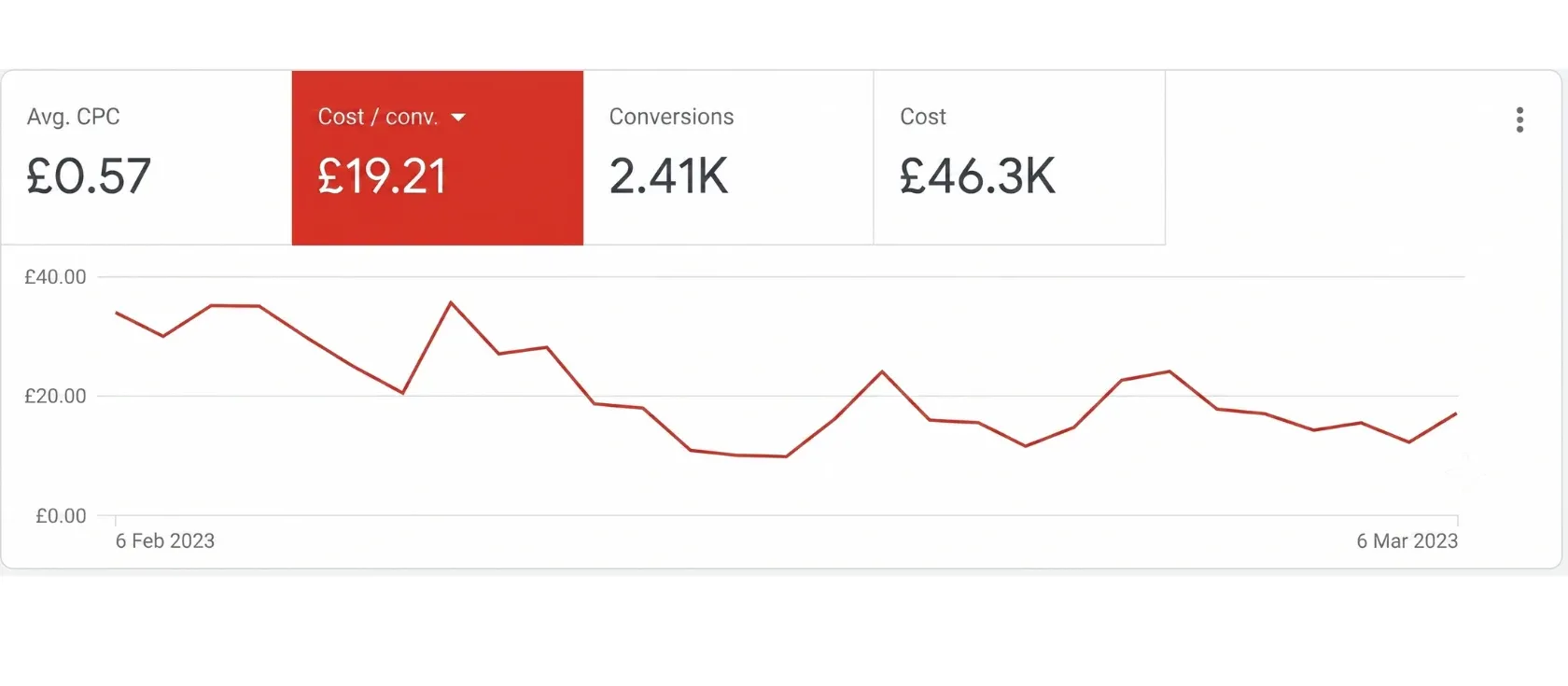
Google Ads, lead generationMedia buying
2.41Kconversions
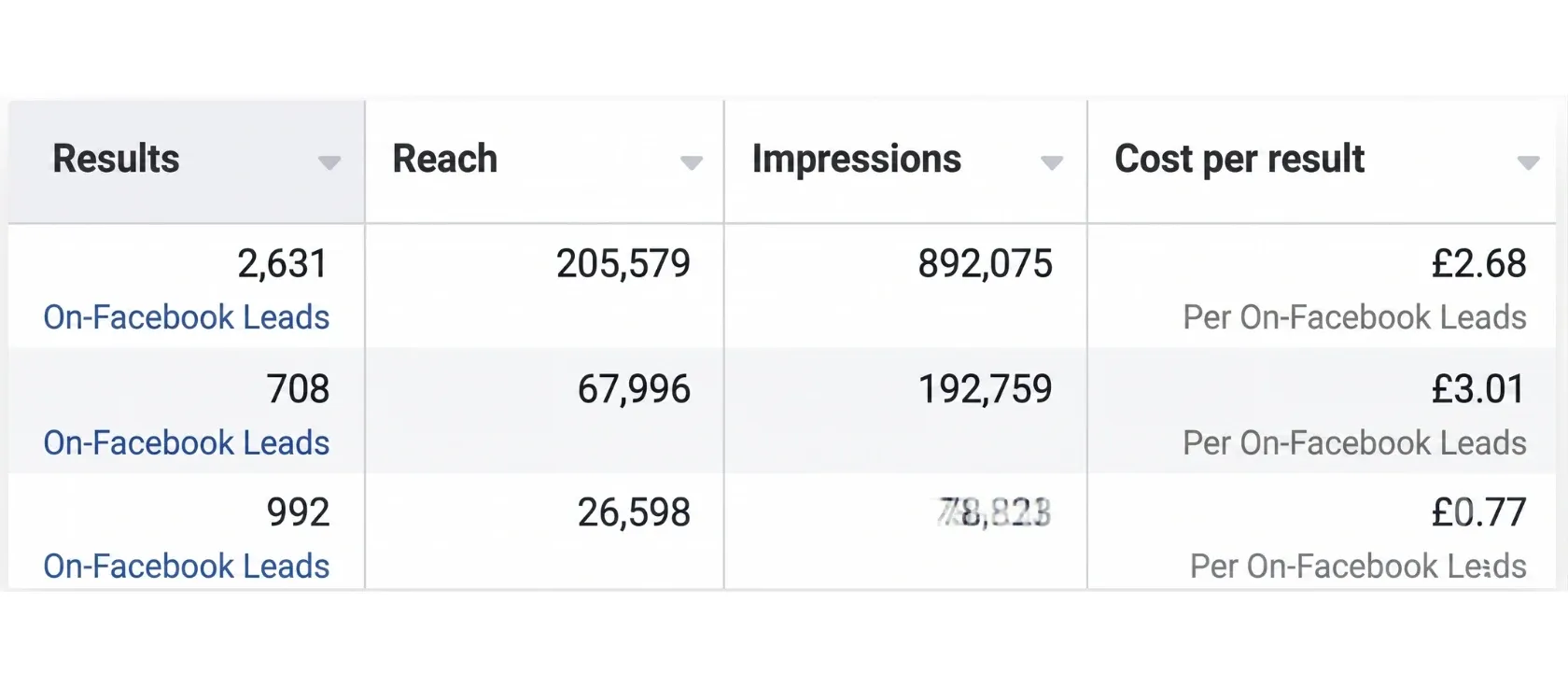
Meta, lead generationMedia buying
£2.68cost per lead
Questions
Next step
Send us the account and we will separate the leads you can act on from the ones you cannot, and tell you what each is costing.
Free, written by a person, yours to keep either way.
Free review
The review is free, and yours to keep whether you hire us or not.