
Mavix Marketing Mavix Marketing, home +1 (510) 312-5086

Conversion guide

Landing pages for paid traffic, built around the promise in the ad

A landing page has one job: continue the sentence the ad started. Most of them start a different sentence, which is why the traffic is fine and the conversion rate is not.

All guides

10 min read · 7 steps · By Aman Mishra · Written August 2026
Cover graphic for Landing pages for paid traffic, built around the promise in the ad

What you end up with

A page whose heading matches the ad, whose form asks only what you need, and which answers the three objections that stop your specific buyer before it asks for anything.

Have these ready

  • The ad copy the traffic is coming from
  • Your last twenty enquiry conversations
  • Somewhere to publish a page and measure it

What it takes

10 min to read

7 steps, in the order below. Skip to the one you are stuck on.

You can spend a month improving an ads account and gain less than you would from an afternoon on the page the ads point at.

The reason is arithmetic. Halving your cost per click is hard and there is a floor. Doubling the proportion of visitors who enquire is often just a matter of the page answering the question the ad raised.
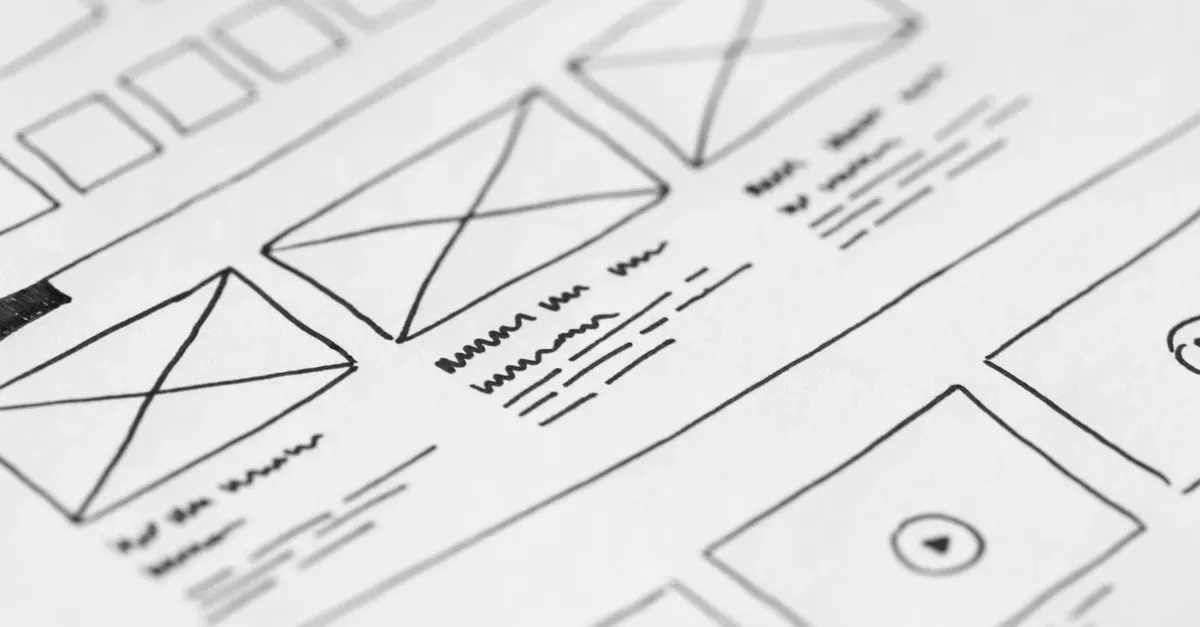
Close view of a web page layout sketched in pen on paper
Photograph by picjumbo.com on Pexels
  1. Match the heading to the ad word for word

    The first thing on the page should confirm the visitor is in the right place, using the same language they just clicked.

    Somebody clicked an ad that said something specific. The first thing they see should confirm they are in the right place.

    If the ad says emergency boiler repair, same day, the heading says emergency boiler repair, same day. Not welcome to our website. Not trusted heating specialists since 2009.

    This sounds too simple to be worth a step. It is the single most common failure on landing pages that underperform, and fixing it costs nothing.

    The same applies to organic and to email. Whatever sentence brought somebody here, the page continues it.

  2. Say what it is and who it is for immediately

    A visitor decides whether to stay in a few seconds. Positioning language spends those seconds without answering anything.

    Under the heading, one or two lines that make the offer concrete: what happens, for whom, and what it costs or how it is priced if you can say.

    The enemy here is positioning language. Innovative solutions for ambitious businesses answers nothing, and it takes up the seconds during which somebody is deciding whether to read on.

    A useful test: could a competitor put their name on your opening lines without changing anything else? If so, the lines are not doing any work.

  3. Answer the three objections that actually stop your buyer

    Not generic trust objections. The specific things the last twenty people asked before they bought.

    Not the generic ones. Yours.

    Go and read your last twenty enquiry conversations, or ask whoever answers the phone. There will be three questions that come up nearly every time. How quickly can you come out. Do you work with businesses our size. What happens if it does not work. Is there a call-out charge.

    Those three go on the page, answered plainly, before you ask for anything.

    Most landing pages instead answer objections nobody has, because they were written from the inside. The company history section exists on thousands of pages and is read on very few.

  4. Ask for the least you can act on

    Every field costs you submissions. Fields you do not use in the next conversation cost you submissions for nothing.

    Every field reduces submissions. That is a cost, and it is worth paying only where the information changes what you do next.

    Name, contact method, and one line about the problem is enough to have a useful first conversation for most service businesses. Everything else can be asked on the call.

    Two fields worth singling out. Budget range costs you more submissions than almost anything else and rarely produces an honest answer. Phone number is worth asking for if you actually ring people and worth dropping if you do not.

    If you genuinely need more information, ask for it in stages: a short form first, then the detail on the confirmation page or in the reply. The commitment is already made by then.

  5. Put proof next to the claim it supports

    A testimonial wall at the bottom is decoration. The same testimonial beside the claim it verifies is evidence.

    Proof placed at the bottom in a row of logos is decoration. Proof placed next to the claim it verifies is evidence.

    If you say you turn up the same day, put the review that mentions turning up the same day right there. If you claim experience with a particular industry, the case study for that industry belongs beside the claim rather than three sections down.

    Specific proof beats impressive proof. A named customer describing a small concrete outcome does more than a large number nobody can check.

  6. Remove the navigation and the other exits

    A paid landing page with a full site menu is a page that offers the visitor several ways to not convert.

    On a page built for paid traffic, the full site menu is a list of ways to leave.

    Strip it to a logo and a phone number. Remove footer links to unrelated pages, remove the blog, remove social icons.

    This does not apply to your ordinary service pages, which need to sit inside the site and be navigable. It applies to pages built for a single campaign with a single action.

  7. Change one thing at a time and give it long enough

    Most landing page testing produces confident conclusions from too little data. Decide the sample before you start looking.

    Most landing page testing is done badly in a specific way: two changes at once, stopped after four days because one version looked better.

    Decide in advance how many conversions you need per version, then do not look at the result until you have them. Change one thing at a time so the result tells you something.

    If your traffic is too low for a valid test, and for many businesses it is, do not run tests you cannot read. Make the changes that are obviously right on principle, ship them, and judge on the monthly enquiry count instead. A confident conclusion from thirty conversions is worse than no conclusion, because you will build on it.

When you have done all 7

A page whose heading matches the ad, whose form asks only what you need, and which answers the three objections that stop your specific buyer before it asks for anything.

Questions

Things that come up part way through.

01 Should the form go above the fold?
It depends on how much convincing the offer needs. A low commitment offer where the visitor already knows what they want can put the form first. A considered decision where the visitor needs to be persuaded is better served by the argument first and the form after it, with a second form at the bottom. The reliable rule is that the form should appear at the point where somebody is ready, and that point differs by what you sell.
02 How many form fields is too many?
Any field you will not use in the next conversation is too many. The count matters less than the relevance: a form asking five things a buyer expects to be asked outperforms a form asking three things that feel intrusive. Company size and budget range are the two that most often cost more submissions than the information is worth.
03 Do I need a separate page for every ad group?
You need a separate page for every meaningfully different promise, which is fewer than one per ad group. If two ad groups are selling the same service to the same person, one page serves both. If one is emergency repair and the other is planned installation, those are different conversations and one page will do neither well. Let the promise in the ad decide, since the page has to continue that sentence.
04 How much traffic do I need before a test result means anything?
More than most people use. The practical guide is to decide the number of conversions you need per variant before you start, and not to look at the result before you get there. Stopping a test the moment one version pulls ahead is how teams accumulate a long list of winning changes that never show up in the monthly total.
05 What if several ads with different wording point at one page?
Either make the ads agree with the page or make more pages. The heading has to confirm the visitor is in the right place using the words they just clicked, and one heading cannot match three different promises. If the ads differ only in phrasing, tighten them so they share the claim the page opens with. If they differ in what is promised, each promise needs its own page with its own heading.
06 How do I know if my opening lines are positioning language?
Ask whether a competitor could put their name on them without changing anything else. If they could, the lines are doing no work. Innovative solutions for ambitious businesses answers nothing, and it uses up the seconds in which somebody decides whether to read on. Replace it with what happens, for whom, and what it costs or how it is priced if you can say. Concrete beats impressive in the first two lines.
07 How do I find the three objections that stop my buyer?
Read your last twenty enquiry conversations, or ask whoever answers the phone. Three questions will come up nearly every time. How quickly can you come out, do you work with businesses our size, what happens if it does not work, is there a call-out charge. Those go on the page, answered plainly, before you ask for anything. Objections written from the inside, like the company history section, are answered on thousands of pages and read on very few.
08 Should I ask for a phone number on the form?
Only if you actually ring people. If your first reply is an email, the phone field is a cost with no return, and every field you add reduces submissions. Name, a contact method and one line about the problem is enough for a useful first conversation in a service business. Anything else can be asked on the call, or in stages on the confirmation page once the commitment has been made.
09 Where should testimonials go on the page?
Next to the claim each one supports. A wall of quotes at the bottom is decoration, whereas the same quote placed beside the sentence it verifies is evidence. If you say you turn up the same day, the review that mentions turning up the same day sits right there. Specific proof beats impressive proof, so a named customer describing a small concrete outcome does more than a large number nobody can check.
10 Should I remove the navigation from my service pages too?
No. The advice to strip the page to a logo and a phone number applies to pages built for a single campaign with a single action. Your ordinary service pages need to sit inside the site, link to each other and be navigable. That serves visitors who arrive from search and it is how the site gets understood as a whole. Build the stripped version as a separate page and point the paid traffic at that.
11 My traffic is too low to test, what should I do?
Do not run tests you cannot read. Make the changes that are obviously right on principle, such as matching the heading to the ad and cutting fields you do not use. Ship them and judge on the monthly enquiry count. A confident conclusion drawn from a handful of conversions is worse than no conclusion, because you will build on it. Testing becomes worth doing once the page produces enough conversions per version to decide something.
12 Why did my conversion rate drop after a redesign?
Check the heading first, because redesigns tend to replace the specific promise with something that looks nicer and says less. Then check whether the form gained fields, whether the navigation crept back in, and whether the proof moved away from the claims it used to sit beside. Redesigns usually change several things at once, so the page cannot tell you which one did it. Restore the old version and reintroduce the changes one at a time.

Read next

Where this leads, on the same ground.

Or have us do it

This is a few hours of work if you do it properly.

If you would rather not, send us the site and we will run it on your account and write up what we find, and what to fix first.

Free, written by a person, yours to keep either way.

Free review

Send the address. We will tell you what it is costing you.

  • Search. What you rank for now, and the searches you should be winning.
  • Paid. What the spend is buying, and the campaigns quietly eating it.
  • Email. Whether the list is mailed at all, and what the missing flows are worth.
  • Tracking. Whether it measures anything real, or counts page views as sales.

The review is free, and yours to keep whether you hire us or not.

Send the site. We will say what we would fix first.

A minute to fill in. A written answer from a person, not a sequence.

Free, and yours whether you hire us or not.

Free review

A written plan for more enquiries from your site.

  • What you rank for, and what you should.
  • What the ad spend is buying, and what a lead really costs.
  • Which follow-up emails your list is missing.
  • Whether your tracking counts anything real.

Read by a person, written for your business, back within one working day. Yours to keep whether you hire us or not.

150+ businesses since 2019. No sequence, nobody chases you.

Free, and yours whether you hire us or not.

Book a call

Pick a time that suits you.

Fifteen minutes with the founder, who will have read your site before you speak.