
Email marketing case study · One campaign send
99.54% delivered and a 53% open rate on a list nobody trusted
A list that had been mailed inconsistently, with no authentication on the domain, was set up properly and sent to. Nearly every message arrived and more than half were opened.
99.54%
deliverability rate
2,531
opens
3.12%
click-through rate
Measured over
One campaign send
What to notice
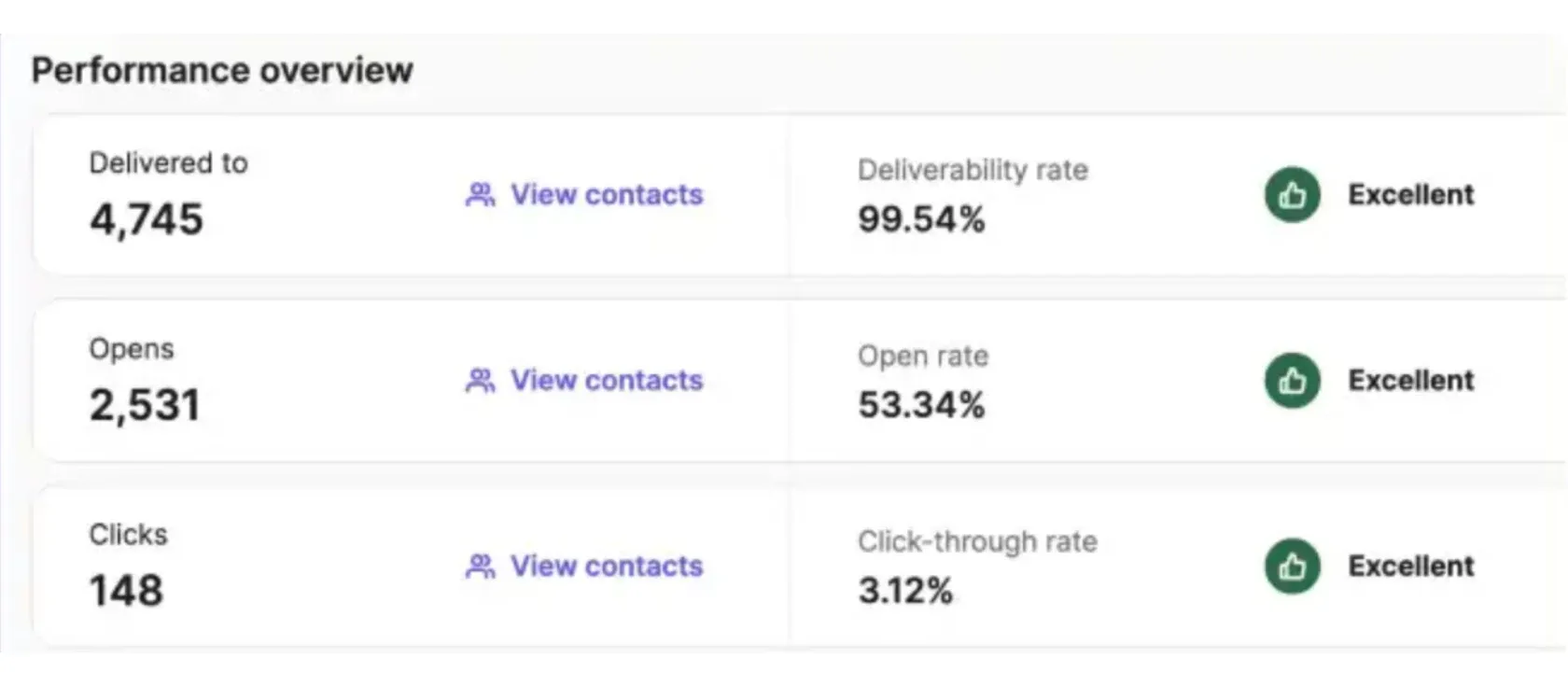
The campaign performance overview: 4,745 delivered at 99.54% deliverability, 2,531 opens at 53.34%, and 148 clicks at 3.12%. All three carry the platform’s excellent rating. Deliverability is the one to read first, because the other two depend on it.
Want numbers like these?
Get a free written review of your own account.
Who the business is

A business with an existing email list. The owner asked not to be named, so the campaign is described by its numbers.
Why marketing mattered
A list is the one audience a business already owns. Mail that does not arrive, or arrives in spam, wastes it, and without authentication a sender has no way of knowing which is happening.
- Service
- Email marketing
- Sector
- Email marketing, single campaign
- Period measured
- One campaign send
- Figures from
- Screenshot of the campaign performance overview
What was not working
The problem
A list that had been mailed inconsistently, with no authentication set up on the sending domain and no idea what proportion of it was actually arriving.
- The list had been mailed inconsistently, so subscribers had no habit of opening.
- No authentication was set up on the sending domain.
- Nobody knew what proportion of the mail was actually arriving.
Where things stood before the work began
There was no reliable deliverability figure to start from, because the domain was not authenticated and the sends had been irregular. The starting point is the absence of a number.
What we found, and why we started there
The thinking
Deliverability comes before everything else in email, because an unopened message that never arrived cannot be fixed with a better subject line. Authentication on the sending domain was the first job. With that in place, a single campaign to the list would show what the list was actually worth.
How we did it, step by step
- 1
Authentication set up on the sending domain
The sending domain was authenticated so mailbox providers could verify the sender, which is the condition for reaching the inbox at all.
- 2
One campaign, sent properly and measured
The send was tracked for delivered, opened and clicked, so every stage of the message has a figure.
What the numbers show
The result
53.3%
open rate
4,745 delivered at a 99.54% deliverability rate, 2,531 opens at 53.34%, and 148 clicks at 3.12%. All three rated excellent by the platform.
From the work to the outcome
- Domain authenticated
- 4,745 delivered, 99.54%
- 2,531 opened, 53.34%
- 148 clicked, 3.12%
How to read this, and what it does not prove
One campaign send, from the sending platform. It is a deliverability and engagement result rather than a revenue one, and no revenue figure was supplied with it. Open rates are inflated on some mail clients that pre-load images, so the delivered and click figures are the firmer two.
This is one campaign, not a programme, and it is engagement rather than revenue. A 53% open rate says the mail arrived and the subject line worked; it says nothing about what those opens were worth, and no revenue figure was supplied with it. Open rate is also the least reliable email metric there is, because image-proxy prefetching inflates it on some providers. The deliverability and click figures are the more solid two.
Want this for your business?
It starts with a free written review.
What you can take from this
Authenticate before you send
Without authentication on the domain there is no deliverability figure to trust. It was the first job here and it is the first job on any list.
Read delivered before you read opened
A high open rate on a low delivery rate means little. Here 99.54% arrived, which is what makes the 53% opens worth having.
One send is a reading, not a programme
This campaign shows what the list can do. What it does month on month is the next question, and the one a programme answers.