
My Favorite TherapistsSEO
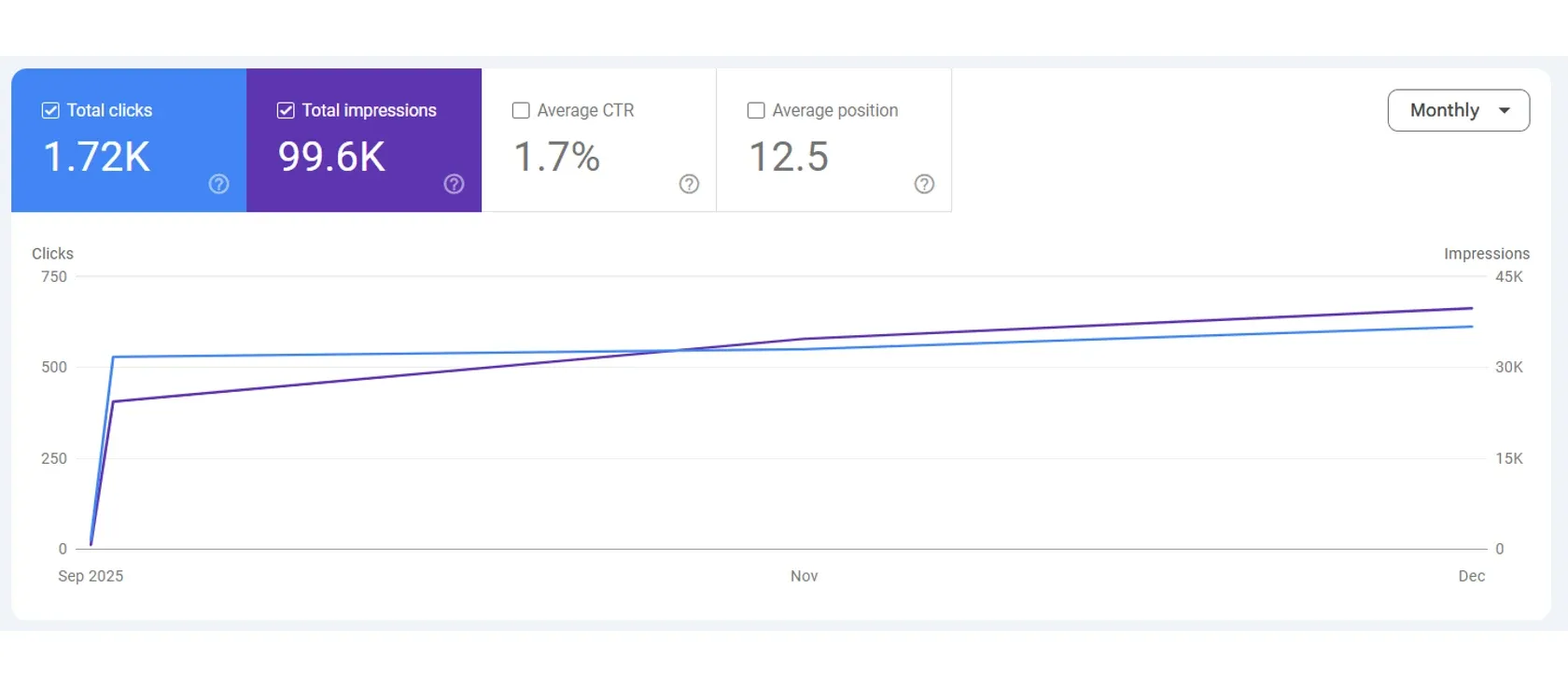
99.6Ksearch impressions
- 1.72Kclicks
- 99.6Kimpressions
- 12.5average position
Dental SEO
You rank for your own name and not much else. The practice two streets away shows up for implants, for Invisalign and for the insurance plans you also accept. Patients are searching for all of it every day, and your site has one page called Services that tries to answer every question at once.
Or call +1 (510) 312-5086 Mon to Sat, 9:00 to 18:00 ET
Free, written by a person, yours to keep either way.
Certified across the platforms we buy on. 150+ businesses, 7 years.






Dental searches fall into five groups, and each one wants a different page.
The dental industry page explains why insurance comes first. This page is about the website work that follows from it. The plan and urgent searches are mostly decided on the map, which is covered under local SEO for dental practices. Cost, comparison and reassurance searches are decided by pages on your site.
The treatment page has nothing a patient could not find elsewhere. A 200-word implant page with a stock photo answers no question. Google says its systems give more weight to experience, expertise and trust on health topics. The same guidance asks whether it is clear who wrote the page. For a practice, that means the treating dentist is named, with credentials, on the page.
Suburb pages are copies of each other. Twenty pages that swap the town name and send everyone to the same booking form match what Google calls doorway abuse. Write a location page only for a place where you have a chair.
The schema says “business” when it could say “dentist”. Google’s advice is to use the most specific LocalBusiness type and to include name, address and hours. Schema.org has a Dentist type. Google also says structured data does not guarantee any feature in results.
Patient photos are used without a paper trail. Under the HIPAA Privacy Rule a covered practice needs a patient’s valid authorization to use their information for marketing. A smile gallery is marketing. This is not legal advice, so confirm your consent forms with your own counsel.
These timings are our rule of thumb for a single-location practice. Google sets the pace, and we do not promise a position.
Month one. You get a list of every treatment you offer set against the pages that exist. We check that Google can crawl and index the site, connect Search Console, and put accepted plans on the site as text. The keyword research guide shows how the list is built.
Months two and three. The treatments with the most margin get their own pages first. Each page covers who it suits, what happens at each visit, a cost range, finance options and who performs it.
Months four to six. Cost and comparison pages go up, internal links are tidied, and we look for links from local and professional sources. Pages that rank on page two get rewritten against the searches they already appear for.
We do not publish a dental SEO price. You get a quote after a free review, and the SEO pricing page shows how our plans are structured. For market context, read how much SEO costs.
Four things move the cost. They are the number of treatments that need pages, the number of locations, how contested your city is, and how much of the site needs rebuilding.
One number helps with the comparison. The average Google Ads click for dentists was $8.00 in LocaliQ and WordStream’s 2026 benchmarks, drawn from more than 13,000 campaigns between April 2025 and March 2026. A page that ranks keeps bringing visits without a charge per click. Put your own numbers into the SEO ROI calculator before deciding.
| The search | What the patient wants | The page that answers it |
|---|---|---|
| dentist that takes Cigna near me | To know you accept the plan | An insurance page with every plan in text |
| how much do dental implants cost | A range, and what changes it | Implant page with cost and finance sections |
| Invisalign vs braces for adults | Help choosing | A comparison page written by the treating dentist |
| does a root canal hurt | Reassurance | A treatment page that walks through the visit |
| emergency dentist open now | A slot today | Emergency page with hours and a phone number |
| pediatric dentist accepting new patients | Availability for a child | A children’s dentistry page with booking |
The first number in your report is new patients from organic search, split by treatment. Rankings and visits come after that, as explanation.
To get that number, calls and booking forms have to be tracked, and that is where a dental practice has to be careful. HHS guidance says that when a patient books through a clinic website that uses third-party tracking, the tracking vendor is a business associate and a business associate agreement is required. The same bulletin says a cookie banner is not a valid HIPAA authorization. A federal court set aside part of that bulletin in June 2024, and the page notes it.
So we ask each vendor in writing whether it will sign an agreement. Where one will not, we keep it off booking pages and count bookings inside your practice software instead.
If you opened last month and need patients in the chair now, start with Google Ads for dentists. Search work takes months to pay back.
If your Google Business Profile is unclaimed or half-filled, fix that first. It is quicker, and it decides the “near me” searches.
If the front desk misses calls at lunch, more traffic means more missed calls. Fix the phone, then come back to SEO.
And if your diary is already full of hygiene work, the question is which treatments you want more of. You should have that answer before anyone writes a page.
Proof
Not a dental practice. A pediatric therapy practice, the nearest published account: a local clinic that patients find by searching for a treatment near them.
My Favorite TherapistsSEO
99.6Ksearch impressions
Questions
Next step
A written review of your search, ads and follow-up, by a person. You keep the document whether you hire us or not.
Free review
A 50% increase in 90 days, or you get a refund plus $1,000. Yours to keep whether you hire us or not.