Mavix Marketing Mavix Marketing, home +1 (510) 312-5086

Paid ads

Paid ads judged by the leads your sales team will actually take

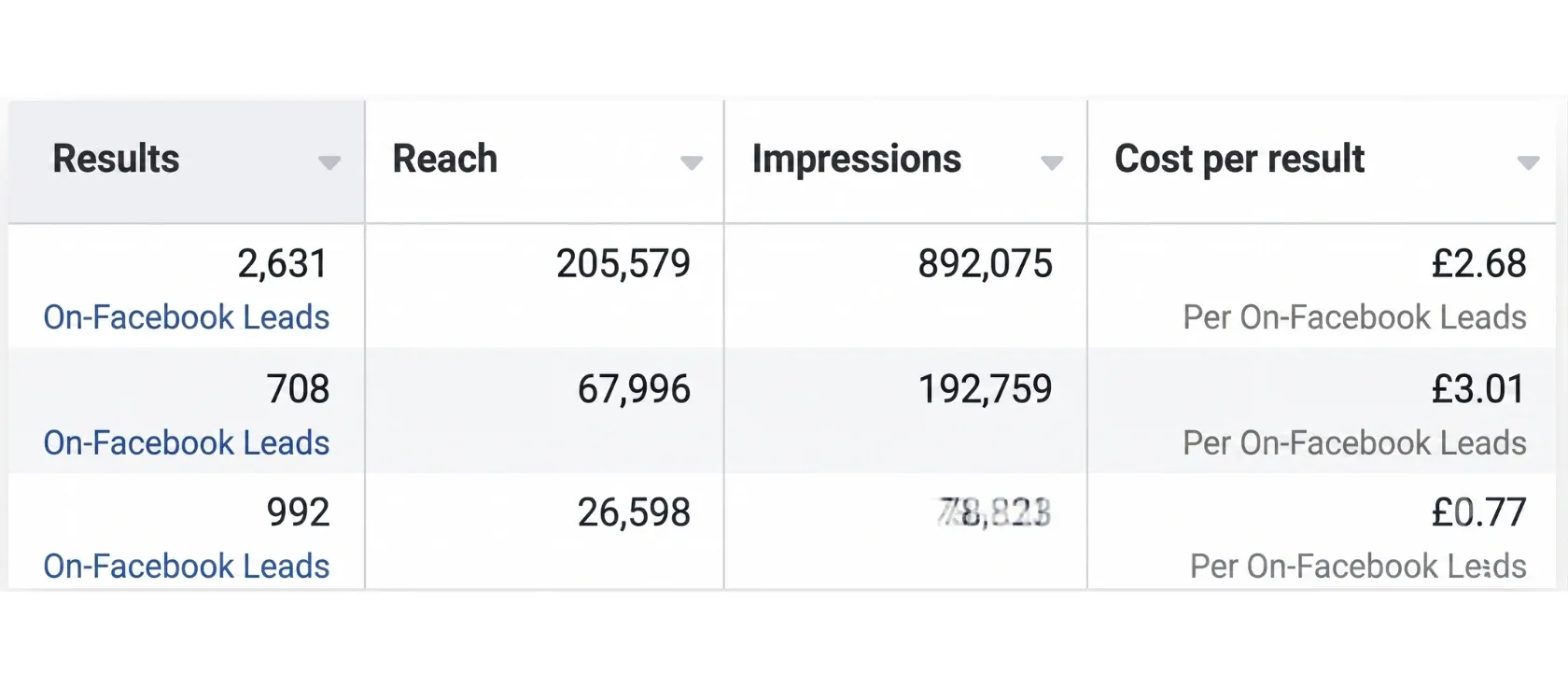
Every paid platform will spend your budget and report a number that looks like success. On one Meta account measured here, 2,631 leads arrived at £2.68 each. On a Google Ads account, £4.66K of spend returned £31.4K of tracked sales. Neither number meant anything until somebody checked that a lead was a person the business would take. That check is the job.

See the case studies
  • 2,410 conversions at £19.21 each Google Ads
  • 6.74x return on ad spend Google Ads

What we report on

  • Cost per qualified lead
  • Qualified lead volume
  • Return on ad spend against your break-even ROAS
  • Conversion rate by campaign and by landing page
  • Wasted spend on irrelevant search terms
  • Impression share lost to budget against lost to rank

Certified across the platforms we buy on. 150+ businesses, 7 years.

  • Google Ads Partner
  • Google Partner certification
  • Meta Business Partner
  • TikTok Marketing Partner
  • Shopify Partner
  • SEMrush Agency Partner

How it works, in plain steps.

Paid ads: pay for a lead, not for a month.

1First, we fix the tracking.

What the ad account can see
✓Form enquiries
✓Phone calls from the ad
✓Orders and their value

If the account cannot see a lead, it cannot find you more of them.

Tap a step to see it again.

Fit

Who this is for, and who it is not.

Worth reading before the rest of the page. If the right-hand column describes you, the honest answer is that this is not the service to buy.

This is for you if

  • You are already spending on paid ads and cannot explain what the spend returns in customers.
  • Leads arrive, and too many of them are work you would not take.
  • Your cost per lead has climbed and nobody has explained why.
  • A customer is worth enough that paying for the click makes arithmetic sense.
  • You can answer an enquiry the same day. Paid punishes slow follow-up harder than organic.

This is not for you if

  • Your monthly budget is smaller than the cost of two customers. There is not enough data to optimise against.
  • You want the spend managed but the landing page left alone. On the accounts seen here, the page is what holds the result back.
  • You need leads this week and have no tracking. Measurement gets fixed first, every time.
  • You want the ad spend billed through an agency. Ownership of a client ad account never moves here.

If you are on the right-hand side, say so in the form anyway. We will tell you what we would do in your position, which costs you nothing and costs us fifteen minutes.

What this actually fixes.

The platform is optimising toward the wrong event

If the conversion the account is trained on is a page view, a phone tap that never connected, or a form start, the algorithm goes and finds more of exactly those. Smart bidding is only ever as good as the definition of success it was given.

The keyword or audience is broader than intended

A high click-through rate on a search campaign usually means the match is wider than you think and the ad is agreeing with a search you cannot serve. The account looks busy and buys unqualified traffic all day.

Budget cannot move to where it works

When Google and Meta are managed by different people, or bought as separate products, money stays where it was allocated instead of moving to whichever platform is producing cheaper qualified leads this month.

The three questions any paid account has to answer

Who is this actually reaching? Not the audience you selected. The searches and placements it genuinely matched. The search terms report is the most useful screen in Google Ads and the least often opened.

What happens after the click? The landing page is half the conversion rate and it sits outside the ad account, which is exactly why it gets ignored. No campaign outperforms the page it points at.

What is the account being told to optimise for? Smart bidding does precisely what you ask. If a form start counts as a conversion, you will get a great many form starts.

Answer those three and the platform is on your side. Leave any one of them and it is spending your money against you, efficiently.

Why cost per lead usually falls before spend rises

The instinct when leads are expensive is to raise the budget. In a neglected account the opposite works better.

There is nearly always a set of searches, placements or audiences that have never converted and never will, and they consume real money every day. Cutting those first does two things at once. It lowers cost per lead immediately, and it gives the bidding algorithm cleaner data to learn from, which lowers it again over the following weeks.

One Meta account measured here shows the shape of it: 2,631 leads at £2.68 each on average, with the best-performing ad set reaching £0.77 per lead. Another moved cost per add-to-cart from £25.67 to £1.33 across 1,181 add-to-carts. Those are not bidding tricks. They are what happens when the wrong audiences stop getting the budget.

Only after that is there a case for spending more.

Which platforms get bought here, and which do not

Google Ads, including search, shopping and Performance Max where the account supports it. Microsoft Ads where the audience is there, which in some B2B and older demographics it genuinely is. Meta, meaning Facebook and Instagram. Paid social beyond Meta where the case is made rather than by default.

Not programmatic display, not TikTok, not out-of-home. That is not a judgement on any of them. Buying a channel occasionally is how a client pays for somebody else’s lesson.

Where the line is

No account runs here without conversion tracking that can be trusted. Cost per conversion is never reported as though it were cost per customer. And no cost per lead gets quoted before the account has been seen, because the honest answer depends on your market and your page, and a number invented on a sales call is a number invented on a sales call.

If the question is only about search, Google Ads covers when that platform is the right answer and what a click costs in your category. This is the page for buying across more than one platform, and for the decision about how a single budget gets split between them.

Buy customers, not clicks. Everything else on the invoice is a detail.

Exactly what gets done.

Not a list of capabilities. This is what gets planned, bought and reported across Google, Meta and TikTok each month, and the invoice can be held against each line.

01

A full audit across every platform before spend changes

Structure, match types, audiences, search terms, negatives, bidding, budgets, creative, landing pages and conversion setup. You get the findings and the priority order, and you keep the document whether or not you hire us.

02

Conversion tracking that measures a real enquiry

Form submissions, calls that connected and lasted, booked appointments, and where it makes sense the value attached to each, so the account can optimise toward revenue rather than event count.

03

One budget, allocated across platforms on evidence

Google and Meta run as one programme against one cost-per-qualified-lead target. Money moves to whichever is working this month rather than sitting where it was assigned in month one.

04

Campaign structure that matches how people actually buy

Split by intent and by margin rather than by how your business is organised internally. High-value work does not share a budget with the cheap enquiries that would otherwise consume it.

05

Negative keywords and exclusions as a standing discipline

Search terms and placements reviewed on a schedule rather than once at setup. On a neglected account this is normally the fastest cost-per-lead improvement available.

06

Creative and copy tested against the offer

Written against what the buyer is deciding between, then tested properly. Not three near-identical headlines rotating and being called a test.

07

Landing pages that answer the ad

The page matches the ad, which matches the query or the audience. Where an existing page cannot be made to do that, the case gets made for one that can.

08

Reporting on cost per qualified lead

Not cost per conversion. Qualified means it was work you would take. That is the only number that says whether the channel pays for itself.

How long it takes

What happens, and when.

Nobody can tell you in advance what your account will do. What can be said in advance is what will have happened by when.

  1. 01
    Week 1

    Audit and measurement

    Every account audited in full, and tracking fixed or rebuilt before anything else changes. Optimising an account whose conversion data is wrong makes it worse, faster, and most accounts opened here have had at least one conversion counting something that was not an enquiry.

  2. 02
    Weeks 2 to 4

    Restructure and cut the waste

    Structure rebuilt around intent, negatives applied against the real search term history, budgets reallocated, and the worst landing page problems fixed. This is usually where cost per lead moves most sharply.

  3. 03
    Weeks 5 to 12

    Optimise toward the enquiries you want

    Bidding tuned against clean conversion data, creative tested, search terms reviewed weekly, and budget moved toward whatever is producing work you would take. Lead quality becomes the thing being managed, not only lead cost.

  4. 04
    Ongoing

    Scale only where the arithmetic holds

    Once a campaign reliably returns more than it costs, it gets scaled and adjacent intent gets tested. No expansion into a new campaign type because it is new.

Outcomes, not activities.

Reach is what the platforms sell. These are the things that should be different in the business once the buying is right, each one measurable in the accounts or the CRM.

  • One cost per qualified lead across every platform, so budget goes where the customers are this month.
  • A report that separates leads from qualified leads, and a sales team that agrees with it.
  • Accounts that stay yours: your logins, your history, your card on file with each platform.

Three things you can hold us to.

Per qualified lead, not per month

No retainer. You pay for leads that meet the criteria agreed in writing before launch, and a lead that misses the bar is not billed. Fifty qualified leads in a month, or the next month is free.

One budget across platforms

Google and Meta are run as one programme by one team. Some months one produces cheaper qualified leads and some months the other, and moving the money is somebody's job here.

Your accounts, always

Spend is billed by the platform to your own card on your own account. Ownership never moves and spend is never billed through this agency.

What drives the number.

The number of qualified leads, at a price agreed against your criteria before launch. A roofing estimate, a legal consultation, a property viewing and a software demo are worth different amounts, and the price per lead reflects that. Ad spend is separate and goes to the platforms directly.

Included

  • Audit and conversion tracking rebuild across every platform
  • Structure, negatives, bidding, audiences and budget allocation
  • Creative and copy, written and tested
  • Landing page work on the pages the ads point at
  • A monthly report that opens with cost per qualified lead

Not included

  • Ad spend, which goes to the platforms on your own accounts
  • Leads that miss the criteria you agreed, which are not billed
  • Search and email, which are priced separately
See how pricing works

What happens if it underperforms

A lead that misses the agreed criteria is not billed. Fall short of the agreed monthly volume and the following month is free. Both terms are in writing before launch.

Numbers from live accounts.

Google Ads

2,410

conversions at £19.21 each

£46.3K spend at a £0.57 average cost per click.

Google Ads

6.74x

return on ad spend

£31.4K conversion value from £4.66K spend, at £15.87 per conversion.

Google Ads

6.45x

return on ad spend

787.59 conversions at $4.77 each.

Meta

2,631

leads at £2.68 each

The best-performing ad set reached £0.77 per lead.

Meta

£25.67 → £1.33

cost per add-to-cart

1,181 add-to-carts from 138,529 people reached.

Google Ads

188K

clicks from 14.4M impressions

£59.7K spend at £16.11 per conversion.

Real accounts, anonymised by client agreement. Currency as recorded in the account. Movement varies by market, budget and starting position.

Proof

Accounts where this work was done.

Every figure below is legible in the screenshot beside it, and every card says what the numbers do not establish.

Meta Ads Manager showing 2,631 on-Facebook leads at £2.68 each

Meta, lead generationMedia buying

£2.68cost per lead

  • 2,631leads delivered
  • £0.77best ad set cost per lead
  • 205Kpeople reached
Read from
Meta Ads Manager, the live account
Period
The export carries no date range, so the window behind these figures is not established
Read the full story

A 50% increase in 90 days, or a refund plus $1,000.

A 50% increase in organic traffic, keyword rankings or direct enquiries within 90 days of the engagement starting.

  • The baseline is measured in your own Google Search Console and GA4 in week one, and you get a copy of it before any work starts.
  • The 90 days run from the day access is granted, not the day the contract is signed.
  • Recommended changes are implemented, or we are given the access to implement them ourselves.

On camera

Four clients on camera, in their own words.

Four clients, four industries, one thing in common: the number moved and they said so on camera.

  • Still from the video testimonial by Ahmed

    It is the best long-term investment we have made in the company, full stop.

    Ahmed · Business owner · SEO

  • Still from the video testimonial by Sandra

    The cost per lead from organic is a fraction of what we pay on ads, and that math gets better every month.

    Sandra · Founder · SEO

  • Still from the video testimonial by Aaliyah

    People can book a table without calling during the dinner rush. My host actually thanked me.

    Aaliyah · Restaurant owner · Website

  • Still from the video testimonial by David

    These tech geeks know the Facebook analytics and the data and the pixels and all that stuff that makes a musician’s head explode.

    David · The Wankers · Social ads

Reviews

What clients say, in their own words.

4.9 out of 5 from 22 published reviews

Arjun Malhotra Director, Malhotra Packaging

I have been in business long enough to know that every agency has a presentation about why they are different. That part doesn't interest me. What mattered to us was whether they understood our market and whether they would actually do the work after the meeting was over. So far, they've been practical, responsive and consistent. We discuss priorities, the team works on them, and we review what was done. I prefer that kind of relationship.

Trustpilot review
Camila Torres Founder, Casa Bonita Events

I am probably not the easiest person to build a landing page for because I change my mind constantly. First I wanted it minimal. Then more colour. Then less colour. Then I hated the headline. Then I wanted the old headline back. 😂 What I liked was that the team didn't get irritated or disappear every time I asked for another round of changes. We kept working through it until it finally felt like us.

Told us on a call
Mike Sullivan Owner, Sullivan Plumbing

My son said we needed SEO. I said fine, but I didn't want to hear about it every week. Mavix sorted the important stuff and kept it simple.

Google review

Photos are illustrative. Every quote is the client's own words.

Questions

Questions people actually ask.

01 Why is media buying one service instead of Google Ads and Meta separately?
Because that is how the money behaves. Some months Google produces cheaper qualified leads and some months Meta does, and the right answer is to move budget. When the two are bought as separate products from separate people, nobody is allowed to make that call, so the budget stays where it was assigned and the account underperforms in a way nobody is accountable for.
02 Do you take control of our ad account?
No. Ad spend is yours, billed by the platform directly to your own card, on your own account. Ownership never moves and spend is never billed through this agency. You keep the account, the history and the learnings if the relationship ends, which is not true of every agency and is worth checking before you sign anywhere.
03 Why are my leads so expensive?
Usually one of three things, often all three. Matching is wider than intended, so you are paying for searches you cannot serve. The landing page does not answer the ad, so the same click converts less often. Or the account is optimising toward an event that is not a real enquiry, so the platform keeps buying more of the wrong traffic. The audit says which.
04 What is the minimum budget worth running?
It depends on your click costs and what a customer is worth, so there is no universal figure. The honest test is whether the budget buys enough clicks per month to produce enough conversions to learn from. If it does not, that gets said, and search or work on the pages themselves is usually the better first spend. You can model it yourself with the Google Ads ROI calculator.
05 Do you use Performance Max?
Where it fits, and never by default. It works well over a clean product feed with real conversion data behind it. On a lead generation account with thin tracking it tends to absorb budget into placements you cannot see and cannot judge. That is a decision made per account rather than a house policy.
06 How fast does anything change?
Faster than search. Structure and negative keyword work usually shows a different cost per lead inside the first month because the change takes effect immediately. Bidding needs a few weeks of clean conversion data before it settles.
07 What does a media buying agency cost?
Here, a price per qualified lead, agreed in writing against your criteria before launch, with no monthly retainer. Ad spend goes to the platforms on your own accounts. The pricing page sets out how the per-lead price is arrived at.

What this is usually run alongside, and why.

Work it out yourself

Model the numbers before you talk to anyone.

  • Google Ads ROI calculator Cost per lead, cost per customer and break-even return on ad spend worked out from your real gross margin, so the answer is profit rather than the revenue figure the ads dashboard reports.
  • Lead generation calculator Works backwards from the customers you want, through close rate and qualification rate, to the traffic and spend it takes. Shows the most you can pay per lead before a customer costs more than they are worth.
  • Marketing budget calculator A monthly budget from your revenue and growth goal, split across paid ads, search and email, with fees and media spend separated so cost per lead stays honest.

Do it yourself first

The same work, written out step by step.

Run the checks

The checklist we work through on these accounts.

Read next

Written from the accounts this work was done on.

In your industry

How this works in a specific market.

Free review

Send the address. We will tell you what it is costing you.

  • Search. What you rank for now, and the searches you should be winning.
  • Paid. What the spend is buying, and the campaigns quietly eating it.
  • Email. Whether the list is mailed at all, and what the missing flows are worth.
  • Tracking. Whether it measures anything real, or counts page views as sales.

A 50% increase in 90 days, or you get a refund plus $1,000. Yours to keep whether you hire us or not.

Send the site. We will say what we would fix first.

A minute to fill in. A written answer from a person, not a sequence.

Free, and yours whether you hire us or not.

Free review

A written plan for more enquiries from your site.

  • What you rank for, and what you should.
  • What the ad spend is buying, and what a lead really costs.
  • Which follow-up emails your list is missing.
  • Whether your tracking counts anything real.

Read by a person, written for your business, back within one working day. Yours to keep whether you hire us or not.

150+ businesses since 2019. No sequence, nobody chases you.

Free, and yours whether you hire us or not.

Book a call

Pick a time that suits you.

Fifteen minutes with the founder, who will have read your site before you speak.